AI Agents Can Now Buy From You — If Your Website Lets Them: ChatGPT Wallet, Explained
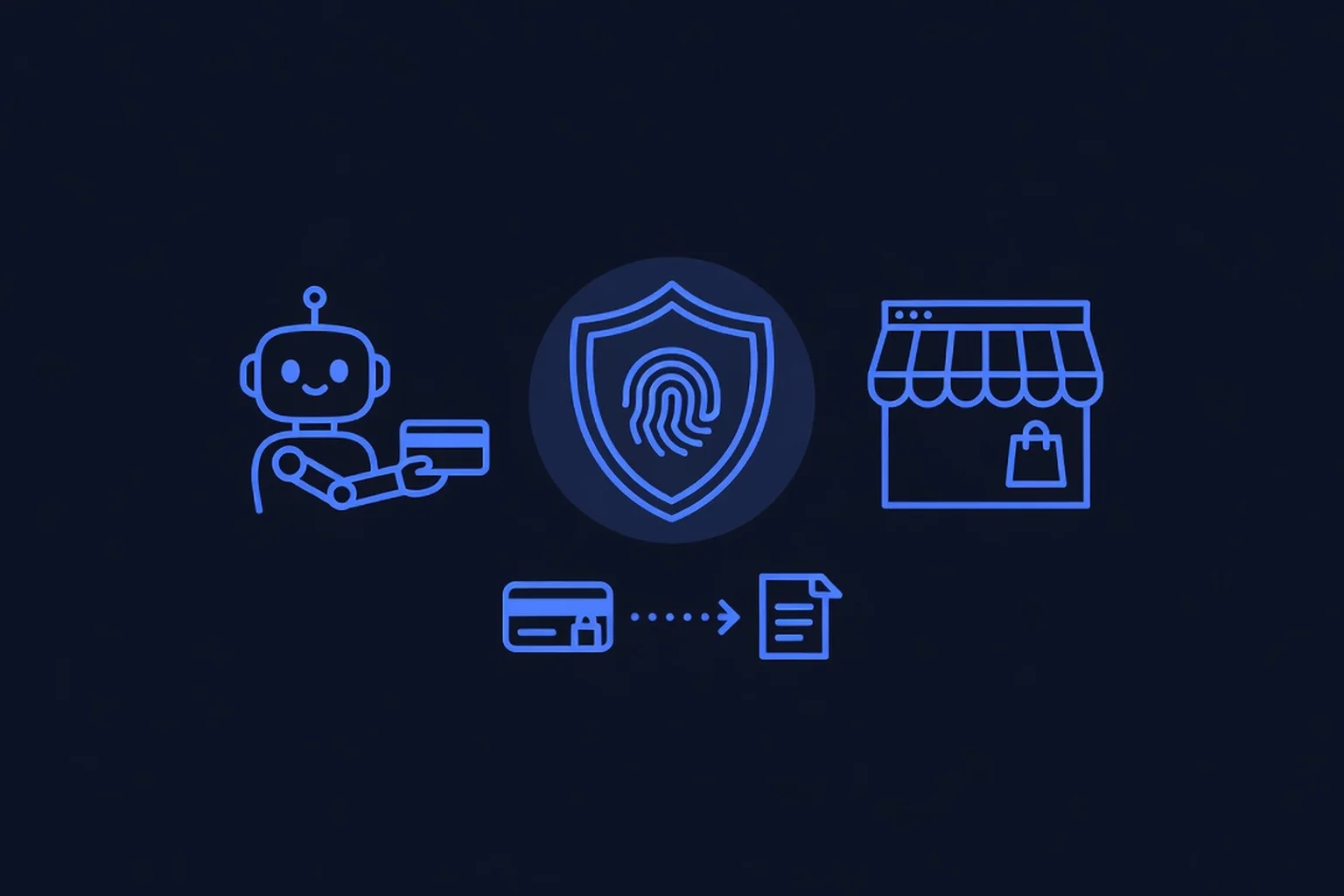
On Friday, November 13, 2026, OpenAI switched on ChatGPT Wallet — and for the first time a mainstream AI assistant can finish a purchase end to end, on a customer's behalf, over the real card networks. The wallet is built in partnership with American Express, Chase, Mastercard, and Visa, and it is rolling out now through OpenAI's always-on "dot" agents to ChatGPT Pro subscribers in the US, with a biometric security check required on every single purchase. OpenAI's own framing stat explains why a local business in Temecula or Murrieta should care: 1.2 billion people use ChatGPT each week, and many of them already use it to research products, compare options, and decide what to buy. Until now that journey ended at "which one should I pick?" — and a human had to come to your website and close the sale themselves. The half of this announcement most owners haven't read is the part aimed at sellers: OpenAI published a Commerce Partner Playbook the same day, because the default behavior of many websites is to block these purchases without anyone noticing. Here is what shipped, how an agent purchase actually works, what the trust research says, and the short checklist that decides whether agents can buy from your business or bounce off it.
What Shipped on November 13
ChatGPT Wallet is a payment layer inside ChatGPT. A user adds a card once, then tasks their dot agent with finding and buying something — a travel booking, a retail item, a service deposit. OpenAI calls it "the first wallet that lets agents pay without access to users' actual card details and that requires a security check for every purchase," while preserving existing card rewards and protections for eligible disputes. The launch scope is deliberately narrow: ChatGPT Pro subscribers, 18 and older, in the US, with eligible US-issued American Express, Chase, Mastercard, or Visa cards. Virtual cards are not supported at launch, and the feature is excluded from Chat, Work, and standalone Codex threads for now. Notably, OpenAI is charging no transaction fees at the start — Chaya Nayak, who leads product for monetization and payments at OpenAI, told CNBC the goal is to "focus on merchants and our network partners and start building out a really great foundation that's safe and easy to use." When the largest consumer AI company prices its payment rail at zero to build adoption, that tells you which direction checkout traffic is expected to move.
How an Agent Purchase Actually Works
The mechanics matter because they set the trust model. Before each purchase, the user reviews the items, the total, and the selected card, then approves with a security check such as Face ID or a fingerprint scan. Each approval creates a clear record of the purchase the user authorized the agent to make — the paper trail that disputes will be settled against. After approval, the payment network issues a payment token: a substitute credential with its own card number, security code, and expiration date. The charge lands on the user's real card, but neither the agent nor the selling business ever sees the actual card details. Users transact directly with businesses, which keep their customer relationships, pricing, fulfillment, returns, and service — the networks simply evaluate the transaction the way they always have.
Then there is the roadmap sentence worth underlining: over time, OpenAI expects users to delegate purchases entirely to their agents by setting clear parameters — spending limits, purchase categories, time periods — pre-approved with enhanced safeguards built on biometric checks and records of authorization. Today every purchase stops for a human fingerprint. The destination is budgets that agents spend inside. Neither state is a threat to a small business with accurate prices and a working checkout; both are a threat to one whose product data is stale or whose site silently locks agents out.
The Seller's Half: the Commerce Partner Playbook
The same day, OpenAI published a Commerce Partner Playbook for businesses, and its opening logic is the sentence merchants should tape to the monitor: to accept payment from ChatGPT Wallet, websites need to ensure agents are not inadvertently blocked, and payment and risk systems need to recognize legitimate purchases made by agents. In other words, the failure mode is silent — an agent hits your bot protection or triggers a risk decline, the customer never knows why, and the sale simply doesn't happen. The playbook's checklist is short:
- Claim your business in ChatGPT and feed it current data. Verify your business, update your details, and — if you sell physical goods — upload a product feed with current pricing and availability so agents compare accurate options instead of cached guesses. We walked the claim-listing steps when OpenAI Businesses launched earlier this month; the wallet makes that hygiene directly revenue-bearing.
- Make sure your site doesn't block the agent. Configure your CDN or firewall to recognize signed requests using Web Bot Auth, and check that your general security settings aren't inadvertently blocking ChatGPT's cloud browser. Browser access requires no plugin and no product feed — your existing website flow is the path.
- Tune payments and risk so legitimate agent buys don't decline. Wallet payment tokens work with existing checkout flows, but risk systems may still flag agent purchases, causing declines or cancellations. OpenAI is working with fraud-prevention partners Forter, Riskified, Sardine, and Signifyd, and payment providers Adyen, Checkout.com, and Stripe, so their systems recognize these transactions — ask your processor where they stand.
- Go deeper if the volume justifies it. Plugins and WebMCP tools can expose structured actions like checking availability or preparing a cart, which improves reliability once agent traffic is real rather than theoretical.
The Trust Gap Is Still the Story
Skepticism remains the honest baseline. Visa research cited by Finextra found only 23% of Americans trust AI to handle payment transactions on their behalf, and separate Visa testing that put models through realistic shopping scenarios saw them fail 43% of the runs. This is also OpenAI's second attempt: Instant Checkout, launched in September 2025 and retired in March 2026, foundered on single-item-only purchases and outdated product data — lessons visibly baked into the wallet's tokenization and the feed-and-access playbook. Payments Dive's read lands at the same tempo: the wallet arrives as the US holiday shopping season starts, but card-network executives don't expect meaningful agent commerce volume until next year at the earliest. Visa's Andrew Torre put it plainly: "Innovation starts slowly until it's sudden." The rails are multiplying in the meantime — Mastercard notched a first agent-completed airfare purchase, Stripe has connected its Link wallet to Meta's Muse agent, and Google's Gemini and Anthropic's Claude are racing in the same lane.
Why This Matters Locally
- Your next customer's assistant may be the one at checkout. A dot that finds your service, likes your price, and then hits a bot wall or a stale page doesn't complain — it moves on. Every silent block is a Temecula or Murrieta sale that never shows up in any analytics dashboard, because the visit itself was turned away.
- Every agent purchase still ends with a human approving a total. The review screen shows the items, the total, and the card. Accurate, structured product data isn't just for the agent — it's what the human rubber-stamps (or rejects) at the moment of truth. The machine-readable accuracy argument we made when Amazon's shopping-agent plans leaked now extends all the way to payment.
- This is the third leg of a stool that got built in four days. Poppy 1.0 gave every Shopify store an agent handshake on November 14, Amazon's World Product Graph is shaping up as the discovery layer, and Wallet is the money. Discovery, access, payment — agents now have all three. The pattern we tracked with always-on AI employees has reached the buy button.
- If you use agents to buy, set guardrails before you need them. Today the fingerprint gate protects you on every purchase. When parameter-based delegation arrives — spend limits, categories, time windows — set them before delegating, and remember Visa's 43% failure rate when you decide how much supervision a shopping agent has earned.
The Bottom Line
ChatGPT Wallet is a limited, careful launch — US Pro users, four card partners, a biometric check on everything — but its direction is unambiguous: the assistant that recommends the purchase is becoming the assistant that completes it. The businesses that win agentic commerce will be the ones whose pricing, inventory, site access, and payment flow are all machine-legible now, while volume is small and mistakes are cheap to fix. That work is the same whether the buyer is a neighbor walking in or a dot acting for one. That is what we do for Temecula and Murrieta businesses every week. PepeWebTech builds AI employees from $397/mo and websites from $1,497 one-time — free setup, no contracts, cancel anytime.
Sources
- OpenAI — "Introducing ChatGPT Wallet" (November 13, 2026) — primary announcement: first wallet letting agents pay without access to users' actual card details with a security check on every purchase; per-purchase review of items, total, and card with Face ID/fingerprint approval; network-issued payment tokens; card rewards and eligible-dispute protections preserved; partnership with American Express, Chase, Mastercard, and Visa; initial availability through dots for ChatGPT Pro subscribers in the US; 1.2B weekly ChatGPT users; Commerce Partner Playbook with claim-your-business, product feeds, Web Bot Auth agent access, and fraud/payments partners (Forter, Riskified, Sardine, Signifyd, Adyen, Checkout.com, Stripe); future parameter-based purchase delegation.
- FinTech Futures — "OpenAI launches ChatGPT Wallet for agentic commerce" (November 17, 2026) — eligibility detail (US-issued Amex, Chase, Mastercard, or Visa cards; virtual cards unsupported; excluded from Chat, Work, and standalone Codex threads), no transaction fees at launch with Chaya Nayak's CNBC quote on merchant focus, and the Instant Checkout history: launched September 2025, retired March 2026 on single-item and stale-data limitations.
- Payments Dive — "OpenAI wallet taps card networks" (November 16, 2026) — card-network context: one of the first agent purchases over Visa/Mastercard/Amex rails; Mastercard's first agent-completed airfare purchase; Stripe Link connected to Meta's Muse agent; Google Gemini and Anthropic Claude competition; executives expecting agent commerce volume no earlier than next year despite holiday-season timing; Visa's Andrew Torre "Innovation starts slowly until it's sudden."
- Finextra — "OpenAI launches ChatGPT Wallet" (November 13, 2026) — trust-gap data from Visa research: only 23% of Americans trust AI to handle payment transactions on their behalf, and separate Visa testing of models in realistic shopping scenarios saw 43% failure rates; merchant-side note that websites must not block agent purchases.
- OpenAI Developers — Agentic Commerce / Partner Playbook guides — the seller-side documentation set: the four-step commerce journey in ChatGPT (describe, compare, browser-use or plugin, business confirms), product feed submission for retail discovery, cloud-browser access checks, ChatGPT Wallet acceptance, Sign in with ChatGPT, and business claiming via Business Hub.