Perplexity's $200 'Teammates' Want to Be Your Next Employee. The Work They Do Is Free — and You Can Start Today.
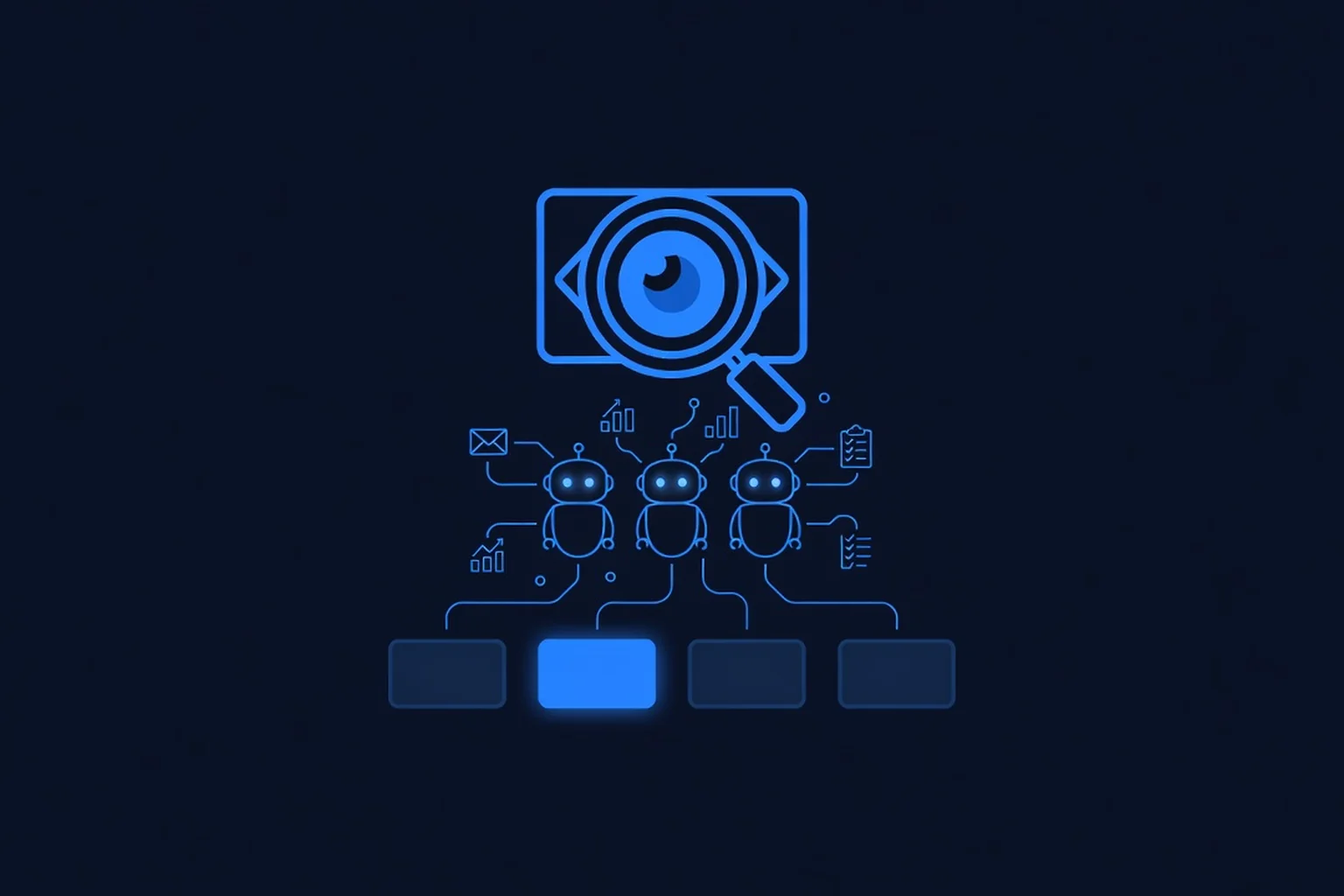
On Wednesday, Perplexity launched Teammates — its entry in the suddenly crowded always-on AI employee market, and the third to arrive in a single month. Teammates are agents that live inside Perplexity Computer, own ongoing work across marketing, sales, support, operations, and finance, and — this is the headline feature — act without being asked: they monitor your work, notice when something changes, and start investigating before you know there's a problem. Perplexity's own flagship example is a sales teammate that notices a regular customer has stopped ordering, pulls the order history and support tickets to figure out why, and drafts either a win-back offer or a fix list. The catch, as The Verge notes: Teammates require Perplexity's $200-a-month Max plan, making this the most expensive door into the always-on layer yet. Here is what actually shipped, how it stacks up against OpenAI's dots and Anthropic's Claude Duet, and — since almost no small business should buy any of them this week — the free version of the exact work these agents do, which you can run in your business before Thanksgiving.
What Perplexity Actually Announced
Teammates build on Perplexity Computer, the company's agent platform, which was already capable of handling complex one-off projects. The new layer is ownership of ongoing work. A teammate plans and coordinates projects, switches gears as priorities change, remembers goals, task history, and shared files across runs, and brings completed work back for review. You can inspect and guide its work along the way — review what it finished, take over the desktop, or redirect it mid-task. Each teammate runs in its own isolated environment with separate browser sessions, inherits the tool and project permissions you already set in Computer, and connects through plugins like Slack, GitHub, and Gmail with encrypted, securely entered credentials. Teammates can also work in parallel and hand work to each other: Perplexity's example is one teammate that finds bugs on a website and passes its findings to another that prepares the fixes. Availability at launch is web-only, for Max subscribers, with iOS "soon" — and CEO Aravind Srinivas is already framing the ambition on X: "Over time, we envision every org having hundreds of teammates working for each person."
The Feature That Matters Is Not the Demo — It Is the Churn Example
Strip away the multi-agent choreography and the launch's most important paragraph is the sales example. A teammate notices when a regular customer stops transacting. It reviews their order history and support issues. It investigates what changed, then creates an offer relevant to that customer or flags issues to resolve before reaching out — sharing progress updates and approval requests until the work is done. That is retention work. It is the highest-margin work in most small businesses, it is invisible when it does not happen, and it is exactly the work that falls through the cracks when the owner is the sales department, the service department, and the marketing department. Perplexity's operations example is the same pattern at lower stakes: a teammate that keeps deadlines and checklists on track and follows up on missing items 72 hours before one lands. None of this is artificially intelligent in a mysterious way. It is remembering, noticing, and following up — relentlessly, at 3 a.m., for every customer at once. What costs $200 a month is not the noticing. It is the relentlessness.
Three Always-On Employees, Three Doors, One Pattern
Teammates make three always-on AI employees launched in a single month. OpenAI's dots debuted on October 5, each with its own cloud computer and browser, built-in rules for when to act alone versus ask, and an auto-review layer for actions that touch your accounts — rolling out to ChatGPT Pro and Business Premium users, with Plus and Free excluded. Anthropic's Claude Duet followed on October 22, offering morning briefs, monitoring of connected apps, and approval gates before anything gets sent, paid, or signed — and notably reaching all the way down to Claude's entry Pro plan, not just Max. Teammates arrives November 4 at the top of the ladder only: Max, $200 a month, per The Verge the most expensive of the three. The pattern worth reading: every major lab now ships the same product shape — a named agent that holds context, watches a stream of work, drafts output, and asks permission before consequential actions — and the differentiation has collapsed into price, integrations, and how good the permission gates are. That is a commodity forming in real time, and commodities fall in price. Nothing about this market rewards being an early adopter this month.
Why This Exists: The Shift From Asking AI to Owning Work
The through-line of this fall's releases — dots, Duet, open-source always-on agents, AI that answers your phone, and now Teammates — is that AI use is moving from "ask and get an answer" to "hand it over and have it keep watching." That shift has a precondition nobody's launch blog will emphasize: the work has to be readable. A churn-spotting agent can only notice a customer going quiet if the order history and support conversations live somewhere it can see. If your customer records are scattered across email threads, a drawer of paper tickets, and your own memory, no tool — human, AI, or otherwise — can do this work for you at any price.
What a Temecula or Murrieta Business Should Do This Week
- Run the lapsed-customer exercise by hand — it is free, and it is the entire product. List customers who have not ordered in 60 or 90 days. Skim each one for a one-line reason if you know it. Pick five, reach out personally this week. A $200 agent automates this loop; the loop itself costs you one focused morning, and done at all it beats a competitor's agent that has not been set up either.
- Get your customer history into one readable place. One spreadsheet beats five inboxes. Every follow-up system you will ever hire, subscribe to, or be pitched depends on this, and it stays true whether the next Teammates costs $200 or $20.
- Write the approve list before you ever hire an agent. Two columns: what AI may do alone (drafts, summaries, status checks, research) and what a human always approves (anything sent to a customer, discounts, refunds, spending). Every serious agent ships with permission gates now — dots' custom rules, Duet's approval prompts, Teammates' approval requests — but the gates only protect you if you have decided, in advance, where they sit.
- Do not chase the launches; watch the price line. Three comparable always-on employees shipped in one month at three different price points, and this layer is being repriced continuously. Buy when a tool matches a job you have already defined and a process you have already cleaned up — not because it launched on a Wednesday.
- Map which follow-up work is automatable — free. Book a free consultation and we will go through your sales and follow-up flow: where leads stall, what a draft-and-approve agent could safely take over today, and what needs fixing first so any tool — now or next year — actually helps.
The Bottom Line
Teammates will not change a Temecula or Murrieta business's week — at $200 a month on a Max plan, it was not built for this week's you. But the loop it automates is the real news: notice who went quiet, find out why, act before the relationship dies. That loop is free to run by hand, it compounds, and the businesses that run it — with or without an agent — are the ones a hundred teammates cannot displace later.
Sources
- Perplexity — "Teammates are agents for complex, ongoing work" (November 4, 2026) — primary source for the announcement: teammates as personal agents that plan and coordinate projects, switch gears as priorities change, and present results for review, built on Perplexity Computer's tools, files, Projects, skills, and memory; the sales example (a teammate noticing a regular customer stops transacting, reviewing order history and support issues, then drafting an offer or flagging issues); marketing, sales, support, and operations workflow examples including the 72-hour deadline follow-up; isolated per-teammate environments with separate browser sessions, encrypted credentials, and inherited tool/project permissions; Slack integration and teammate-to-teammate work handoffs; and web-first availability for Max subscribers with iOS planned, with free and Pro subscribers directed to upgrade.
- The Verge — "Perplexity launches its own take on AI agents for work" (November 2026) — primary source for the competitive and pricing framing: Teammates as always-on agents comparable to OpenAI's Dots and Anthropic's Claude Duet, running 24/7 and taking on multiple roles within a workspace; the requirement of Perplexity's $200-a-month Max subscription, making it more expensive than its rivals' equivalents; progress tracking through threads and Slack; and CEO Aravind Srinivas on X envisioning "every org having hundreds of teammates working for each person."
- GIGAZINE — "Perplexity announces its proprietary business-specific AI agent, 'Teammates'" (November 6, 2026) — corroborating source for the launch timeline (announced November 4, 2026), the lineage from the Comet browser (July 2025) through Perplexity Computer, the distinction that Computer handled complex projects but managing ongoing tasks required prior planning, and initial availability as a web version for paid Max-plan subscribers with an iOS version planned.