Anthropic's Claude Duet Is a Back-Office AI Employee. Your Front Line Still Needs Its Own.
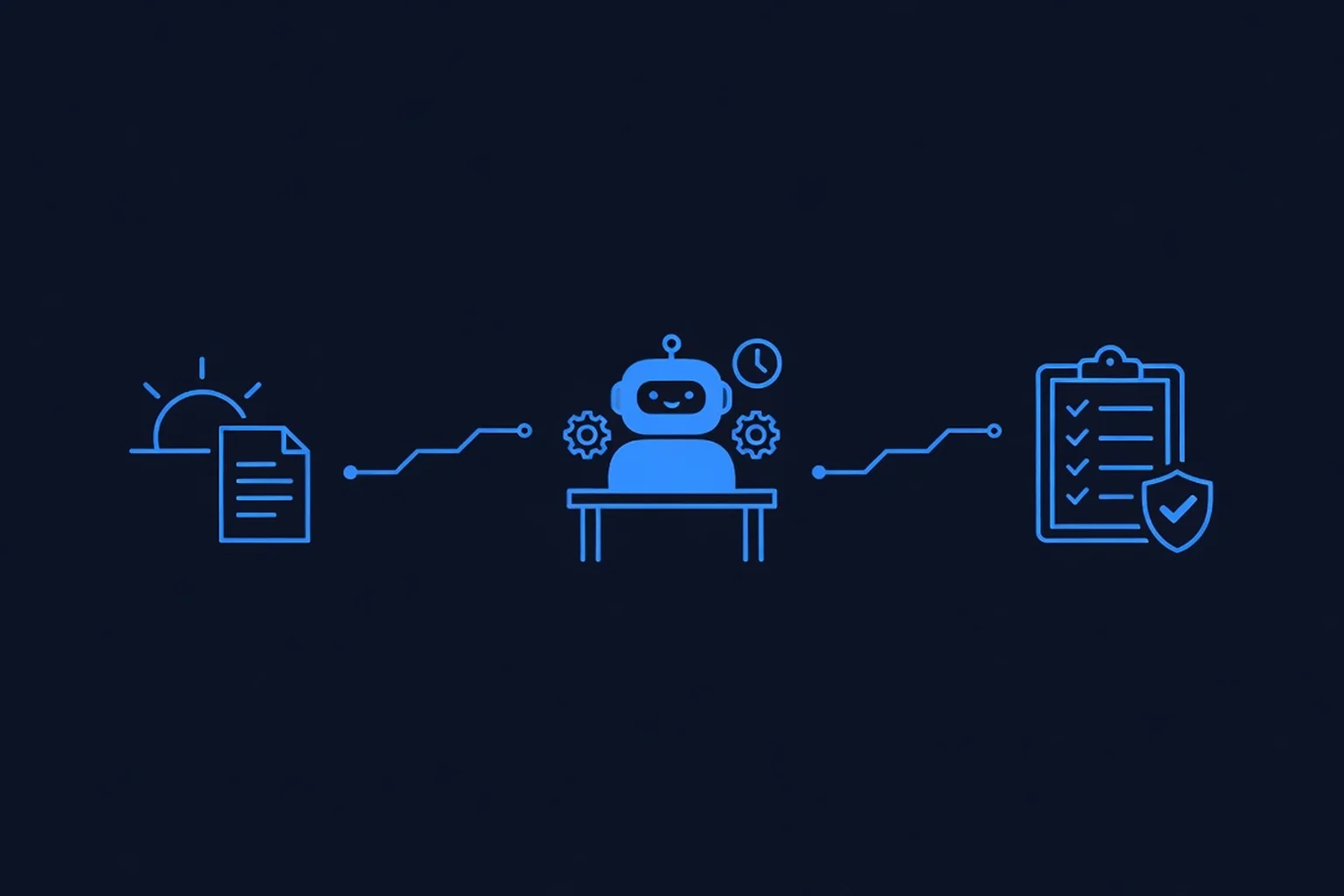
On October 21, Anthropic opened the research preview of Claude Duet, a new standalone app where Claude works as a proactive agent — and unlike most agent launches this year, it is aimed squarely at you, the owner. Anthropic's own words: "We built Claude Duet for professionals and small business owners with more on their plates than they can track." Each morning it sends a short brief of what matters across your connected apps, checks in every few hours, messages you only when something needs attention, and keeps working on its own virtual machine after you step away — scheduling meetings, drafting invoice reminders, prepping payroll, even building dashboards. Access is by waitlist for Claude Pro and Max subscribers in the US, on iOS, Android, and claude.ai, sharing your plan's existing usage limits. It is the third major "always-on agent" to land in three weeks — after Meta's Muse on October 1 and OpenAI's Dots on October 5 — and it draws the market's dividing line more clearly than either: this is not an AI that faces your customers. It is an AI that faces your inbox, your books, and your calendar. The AI workforce is splitting into two jobs, and Duet is the strongest entry yet for the one you have been doing yourself at 10 p.m.
What Actually Shipped
- A proactive agent, not a chatbot you prompt. Claude Duet comes to you: a morning brief across connected apps, then periodic checks — "every few hours, because checking nonstop would use up your plan's limits much faster," as the announcement puts it — with a notification only when something needs you. You reply by typing or voice in one ongoing thread, and tasks keep running in a virtual machine with its own browser, so your laptop and phone can be off.
- Built on Opus 5.5, wired into the tools a business already runs. It carries over the memory, skills, and connected apps from your Claude account and can use more than 6,000 connectors and plugins in the Claude Marketplace. Anthropic's own examples read like a small-business back office: find missed Gmail and Slack messages and help you reply, check Intuit QuickBooks or Stripe for unpaid invoices and draft reminders, prepare and run payroll in Gusto, draft a job posting and (after you approve) post it to LinkedIn, send agreements through Docusign, draft HubSpot follow-ups from deal history, run a Canva social campaign, or set up and manage a Shopify store.
- Approval gates are the design centerpiece. Before Duet sends a message, makes a payment, signs a document, or deletes anything, it shows you exactly what it is about to do and waits. Some actions are off-limits even with your approval — trading securities, moving money between accounts. You can disconnect any connected app at any time. It can also buy things for the business through Stripe's Link wallet, paying with a virtual card so your real card number is never shared, or check out with Shopify's Shop Pay; 1Password sign-in is coming soon.
- A sensitive-information classifier ships with it. A new classifier and safety system prompt check each message Duet handles, rejecting requests to share the strictest tier — credit card numbers and government identification — outright, and passing things like health or personal finance data only when you have explicitly instructed it to send them. Given what happened when a marketplace agent handed a stranger a home address, that guardrail is the new baseline, not a nicety.
- Real small-business owners tested it — with named, on-the-record results. Amin Ebrahimi, who owns Shahs of Kabob in South Florida with about 110 employees, used Duet for accounting, customer support, and marketing and worked through invoices store by store: "It brings it all together. I don't need to open up 100 tabs." Jess Provencher, a broker and owner of Pro Homes, got a morning rundown that — unprompted — flagged a property showing sitting on her calendar for the wrong day. Brand strategist Mya Dalton's Duet saw a client call on her calendar, prepared a brief for it, noticed it fell right before her flight, and offered to move it.
- The honest limits are stated up front. Anthropic says this early version "still might misread a thread or miscalibrate what's urgent," it is not good at personal errands like booking tickets, and it cannot show you its browser as it works. TechCrunch also notes the competitive frame: Duet is Anthropic's answer to Meta Muse, OpenAI Dots, Hark, Instinct, Grok Bot, and Fo — a crowded field where Anthropic is betting that work-focused proactivity, not errand-running, is the wedge.
Why This Matters for a Temecula or Murrieta Business
Every owner here has two businesses: the one customers see and the one that happens after close. Friday night at a Temecula tasting room or a Murrieta dental practice, the front line is the phone, the chat widget, the form — the channels where a customer asks once and moves on if nobody answers. The back office is the other half: forty unread emails, invoices in QuickBooks that never got chased, payroll math, the job posting sitting in drafts since August. Muse, Dots, and now Duet are all racing to sell you an agent for the second chair. None of them answers your phone. That distinction matters because the marketing is blurring it — an "AI employee" that manages your inbox will not stop a missed call from becoming a missed customer, the leak we have tracked since it was costing Main Street real money. Two different jobs, two different hires.
The second thing worth noticing is the meter. Duet checks your accounts every few hours specifically because constant polling would burn through your plan's limits, and Anthropic is explicit that background checks and larger tasks all draw down the same pool as your normal Claude usage. That is a metered employee — useful, but not free at scale, and the research preview pricing tells you nothing about steady-state cost. Hold that same skepticism you would for any hidden AI bill: what matters is the monthly number once the novelty wears off and the agent is checking six tools four times a day.
The third is trust architecture. Anthropic has effectively published a spec for what a safe small-business agent looks like: approval gates before anything irreversible (send, pay, sign, delete), a hard off-limits list even the owner cannot override (securities, money movement), per-message classification of sensitive data, and a one-tap way to revoke any tool's access. That is a checklist you should now demand from every agent you deploy — the payment-approval discipline we recommended when Wix agents started spending money for merchants, and the permission audit that Muse's home-address incident made mandatory. And remember the platform bet you are making: if your back office runs on one vendor's connectors, a vendor shutdown strands it, the risk we walked through when Character.AI filed for bankruptcy with paying business customers attached.
What to Actually Do This Week
- If you already pay for Claude Pro or Max, join the waitlist — with one bounded job. Do not connect everything on day one. Give Duet a single domain for the first week, ideally the lowest-risk, highest-nag one: unpaid-invoice reminders drafted from QuickBooks or Stripe for your review. Judge it on that, not on demos.
- Write your approve-first list before you connect a single app. Mirror Anthropic's own design: nothing sends, pays, signs, or deletes without showing you first. Then go one step further and write your hard no-list — the actions no agent of yours may take even with approval. If a vendor's agent cannot tell you where its gates are, that is your answer.
- Audit what the agent will read before it ever reads it. A back-office agent sees email, invoices, payroll, and customer records. Strip stale passwords, old card numbers, and anything a classifier might misroute out of the inboxes and drives you are about to connect. The cheapest data-leak audit is the one done before access is granted.
- Count your tabs honestly, then hire for the actual bottleneck. If your pain is tabs — email, books, scheduling — a Duet-class agent is the right category. If your pain is the front line — calls going to voicemail at 6 p.m., site chats nobody answers, forms that wait two days — the back-office agent is the wrong hire, and the delay is still costing you customers.
- Budget both seats, not one. The realistic 2027 small-business stack is a front-line AI that answers customers instantly on every channel, plus a back-office agent that keeps the owner's plate clear. We build the front line: PepeWebTech sets up AI employees for Temecula and Murrieta businesses — an AI Chatbot at $397/mo for your site and messages, an AI Phone Agent at $697/mo that answers every call the moment it rings, or the Full AI Package at $997/mo — free setup, flat pricing, month to month, cancel anytime. Book the free demo and we will map which seat you need first.
The Bottom Line
Three always-on agents from three of the biggest names in AI inside three weeks — Muse, Dots, Duet — means the back-office agent is no longer a concept; it is a product category with a price war coming. That is good news for owners drowning in tabs, and Amin's 100-tabs quote is the whole pitch in one line. But your customers do not contact your back office. They call, they chat, they fill out forms, and the fastest-growing businesses here will run both seats: an agent that clears the owner's plate and one that answers the customer in seconds. We cover every turn of both races on the blog — because the AI team you will be hiring next year is being announced one preview at a time.
Sources
- Claude by Anthropic — Introducing Claude Duet (October 21, 2026) — the primary announcement: research preview opened by waitlist for US Pro and Max subscribers on iOS, Android, and claude.ai; built on Claude Opus 5.5 for "professionals and small business owners"; morning briefs and every-few-hours checks; 6,000+ Claude Marketplace connectors including QuickBooks, Stripe, Gusto, LinkedIn, Docusign, HubSpot, Canva, and Shopify; approval gates before sending, paying, signing, or deleting, with securities trading and money movement off-limits even with approval; a sensitive-information classifier rejecting credit card numbers and government ID; Stripe Link virtual-card purchases; and named small-business testers including Shahs of Kabob owner Amin Ebrahimi ("I don't need to open up 100 tabs").
- TechCrunch — Claude Duet app is Anthropic's bet on agents (Ivan Mehta, October 22, 2026) — the competitive frame: Duet targets professionals and small businesses against Meta Muse, OpenAI Dots, Hark, Instinct, Grok Bot, and Fo; Anthropic's deliberate distinction from personal-errand agents (weak at ticket booking, cannot show its browser use live); task completion on its own virtual machine; and Stripe Link / Shop Pay purchasing with user approval for payment steps.