Amazon's Leaked 'World Product Graph' Plan Explains the Next Land Grab: Your Product Data
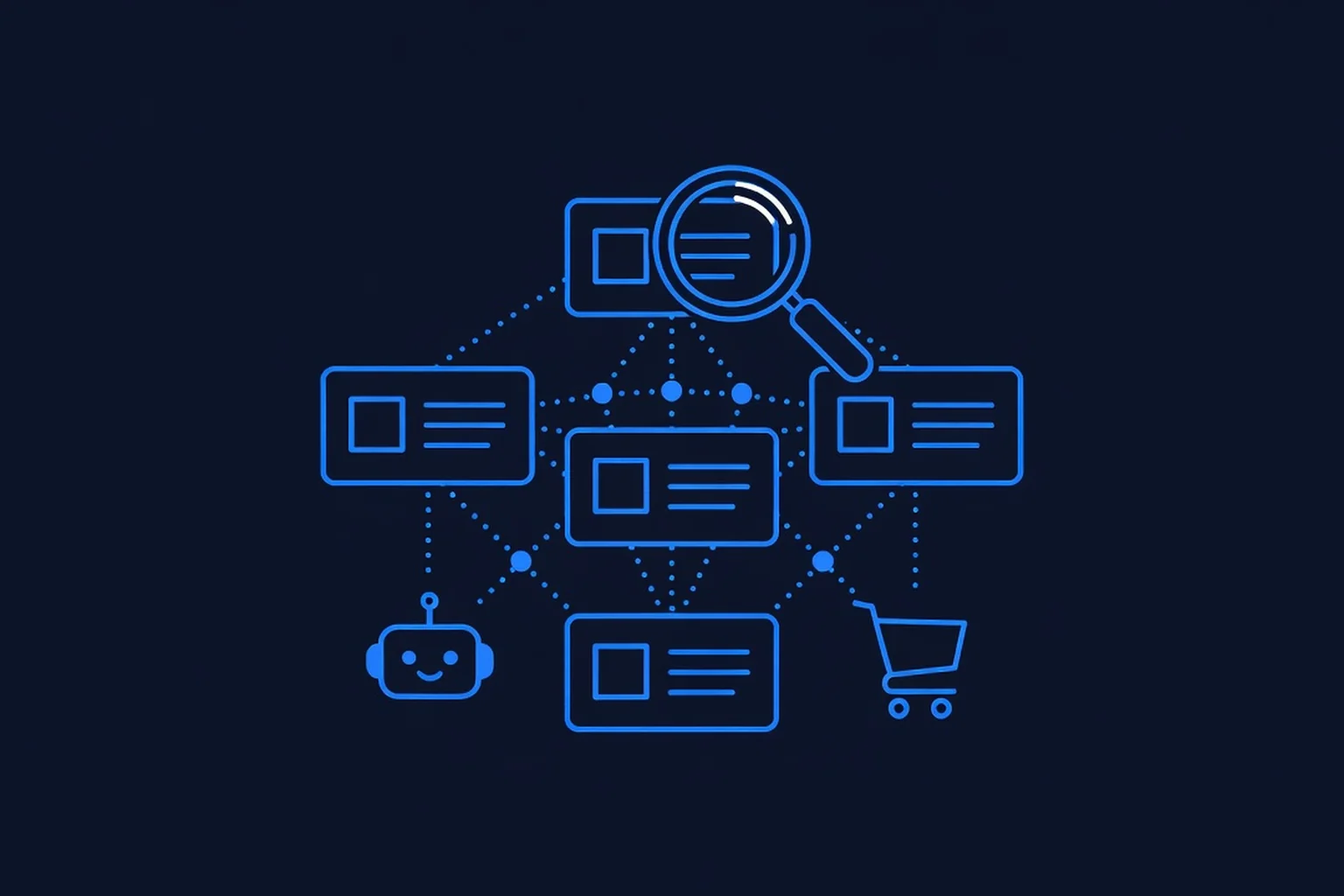
On November 13, 2026, Reuters published an exclusive that should matter to anyone who sells anything online: Amazon is planning a project called World Product Graph, an effort to gather deep data on virtually every item for sale on Earth — whether Amazon stocks it or not. The plan, laid out in an internal document Reuters reviewed, aims at three targets at once: Google's dominance of product search, Walmart's growing e-commerce business, and the rise of AI shopping agents that research and buy on a shopper's behalf. Amazon's own statement calls the document an outdated brainstorm — but pieces of the pattern are already live, and the direction underneath it is unmistakable: whoever owns the cleanest product data owns the answer every AI shopper receives. Here is what the document says, what is already shipping, and what it means for a small store in Temecula or Murrieta.
What the Leaked Document Actually Says
World Product Graph, per the Reuters report, seeks to "hoover up data on virtually every item for sale on Earth," and it "depends on discovering how brands organize their products on their own websites." Some of that data would arrive through brands and retailers contributing it continuously — Amazon has already signed up Coca-Cola and Bayer, and held a CEO-level P&G/Amazon summit to scope a trial. The rest would come from Amazon independently crawling other retailers' websites. Reuters could not determine how Amazon planned to crawl, or whether it would need to seek permission in all cases.
The internal rationale is blunt: "Amazon cannot be the go-destination for every shopping mission if customers must leave to research product relationships on Google, brand websites, and review sites." The document is a PR/FAQ — Amazon's six-page narrative-memo format for scoping new products — with an aspirational release date of October 1, 2027, sitting inside the Selection Catalog Systems unit under VP Robert Tekiela. Not every PR/FAQ becomes a product; this one could be modified or aborted. But it shows where the company believes the next fight is: not checkout, not logistics — the data layer underneath discovery.
Why Amazon Is Worried: Agents and the Search Shift
Two sets of numbers explain the urgency. First, search: a 2025 Morgan Stanley report found only 16% of online shoppers begin product research on Amazon, versus 57% on Google — though when a shopper already knows the exact product they plan to buy, Amazon leads, with 41% of those searches starting there against Google's 23% and Walmart's 18%. Second, agents: Meta's Muse assistant has drawn more than 10 million users in the U.S. and Canada since launching in September, and JPMorgan wrote that Muse "has the potential to become the most widely used consumer AI application since ChatGPT." Amazon blocked Muse from its retail site that same month, and its lawsuit against Perplexity over similar access is still ongoing. On the Q3 earnings call, CEO Andy Jassy told investors that "few customers are doing much shopping this way yet" and that agents have minimally impacted Amazon's ad business — even as Alexa for Shopping, Amazon's own shopping agent (Rufus renamed in May), has been used by over 400 million people in the past year.
The document also admits an uncomfortable internal fact: "Many Rufus answers are factually wrong or incomplete, but customers lack expertise to detect these errors." Users run roughly 83 million searches a week through it, the document says, and running them is "expensive" — richer data would let Amazon lean on cheaper models. Amazon disputes the framing, telling Reuters the usage figures are "significantly outdated" and that its own data shows Alexa for Shopping is roughly 97% accurate globally.
The Walled Garden Is Going Up
Zoom out and the strategy reads clearly: Amazon is simultaneously building its own agent, restricting everyone else's, and trying to own the raw material every agent needs. Block Muse, sue Perplexity, hoard the graph. That is the same enclosure pattern we have tracked across the AI web this fall — publishers fighting scrapers in court, platforms deciding which agents may read what. For sellers, the practical consequence of a World Product Graph is that Amazon could describe, compare, and rank your products inside its walls without ever stocking them — drawing shoppers, and the agents shopping for them, away from rival stores with less data.
And the early version already exists. Shop Direct, Amazon's agentic shopping program, lists products from other stores' websites inside Amazon search; the Buy for Me button has Amazon's AI complete the entire purchase from the merchant's site on the customer's behalf, using Amazon's familiar checkout. Last month Amazon launched the Shop Direct Merchant Workspace, a self-service portal where any eligible merchant can register, connect their store, and submit product feeds — making their catalog discoverable inside Amazon search and Alexa for Shopping. World Product Graph is the ten-year bet; Shop Direct is the today version. Amazon does not need to stock your product to be where it gets found.
What This Means for a Small Store
Strip away the corporate chess and one thing is left standing: shopping discovery is shifting from browsing storefronts to asking agents, and agents answer from data. That cuts two ways for a small business. If your catalog is clean, structured, and consistent — accurate titles, real descriptions, current prices and availability, schema markup on your own site — you are legible to every one of these systems: Alexa for Shopping, Muse, Google's AI answers, ChatGPT. If it is stale or thin, the answer an agent gives about your product will be built from someone else's copy of it, or will skip you entirely. This is the same data-quality discipline we wrote about when Square put a free AI agent behind every register — there the agent mined your own POS data; here the world's agents read your product data. Same law: garbage in, wrong answers out, except now the wrong answer ships to a shopper who never sees your site.
What a Temecula or Murrieta Business Should Do
- Calibrate the urgency. World Product Graph carries an aspirational October 2027 date and Amazon calls it a brainstorm. Do not rebuild your strategy around it. Act on what exists today: Google Business Profile, your own site, structured product pages — the channels where your buyers actually start.
- If you sell physical products, evaluate Shop Direct deliberately. A free feed into Amazon search and Alexa for Shopping is real distribution, and Merchant Workspace makes joining a self-service decision. Weigh it against deepening dependence on a channel that is explicitly trying to own the customer relationship and the data layer under it. Registering is a business decision, not a default.
- Make your own site the authoritative source first. Product schema markup, exact availability, and descriptions that answer what a shopper — or an agent — actually asks: model, dimensions, materials, compatibility, lead time. That work pays in Google, in AI answers, and in every future graph, because it is the version of your catalog everything else will copy or cite.
- Decide your posture on being crawled. If Amazon, or any platform-scale crawler, comes for retailer product data, your robots policy and your site structure are yours to set. Ignoring the question is also a choice — it just defaults to yes.
- Keep the local discovery base healthy. Most product research still starts on Google, and for a local business, search plus maps remains the front door. Fresh hours, real photos, current services — the unglamorous work that keeps you in the answer layer regardless of which agent is asking.
The Bottom Line
World Product Graph may ship, mutate, or die in a drawer — PR/FAQs often do, and Amazon says this one is stale. The strategic fact underneath it does not depend on Amazon's follow-through: the next battleground is product data, and the company that feels most threatened by AI shopping agents is responding by trying to own the data they all read. Your counter-move is smaller and cheaper: own your data on the one channel you control. A website with a clean, structured, current catalog is legible to every agent that comes looking — and that is exactly the work we build and maintain for Temecula and Murrieta businesses. Every memo like this one that leaks makes that work worth more, not less.
Sources
- Reuters — Greg Bensinger, "Exclusive: Amazon's plan to own the world's product data and fight AI shopping agents" (November 13, 2026) — primary report: World Product Graph internal document reviewed by Reuters; cataloging virtually every item sold anywhere; brand contributions (Coca-Cola, Bayer, P&G summit) plus independent crawling of retailer sites; Morgan Stanley 2025 figures (57% Google vs 16% Amazon research starts; 41/23/18 on known-item searches); October 1, 2027 aspirational date; PR/FAQ format; Selection Catalog Systems and VP Robert Tekiela; "Many Rufus answers are factually wrong" admission and ~83 million weekly searches; Muse 10M+ users, Amazon's Muse block and ongoing Perplexity lawsuit; Jassy Q3 quotes; 400M Alexa for Shopping users; Amazon's "outdated brainstorm" statement and ~97% accuracy claim. Full wire text verified via the syndicated Reuters mirror at lufkindailynews.com.
- Amazon (About Amazon) — "Amazon launches Shop Direct Merchant Workspace for merchants" (live page, accessed November 13, 2026) — the already-live piece of the pattern: self-service Merchant Workspace registration for eligible merchants, product feed submission, catalog discoverability in Amazon search and Alexa for Shopping, and the Buy for Me agentic purchase flow completing orders on the merchant's own website.
- Amazon (About Amazon) — "Alexa for Shopping: Amazon's AI assistant for personalized shopping" (live page, accessed November 13, 2026) — current capabilities of the renamed Rufus: questions in the main search bar, product comparisons, up-to-a-year price history, scheduled actions, Shop Direct discovery across other stores, and Buy for Me checkout; free to all signed-in Amazon customers.