The NYT and the Chicago Tribune Just Sued an AI Search Company for Stealing Content. Your Website Is in That Index Too.
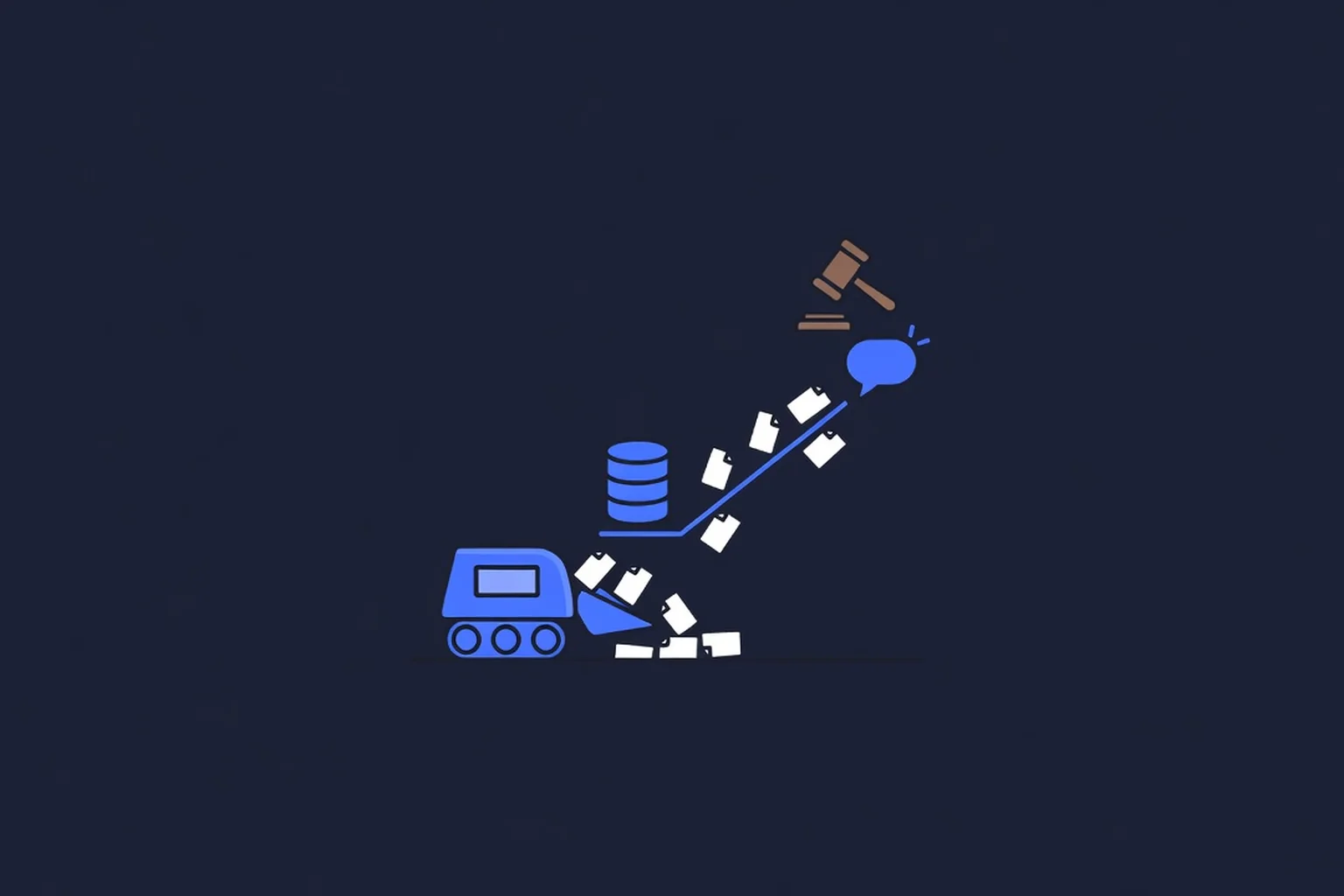
On Monday, the New York Times — and, in a separate complaint filed the same day, the New York Daily News, Chicago Tribune, and Orlando Sentinel — sued Brave Software in Manhattan federal court. The allegation, in the publishers' own words, is that Brave acts as "the supplier, dealer, and distributor of stolen copyrighted content": a 30-billion-page web index built by a crawler that deliberately does not identify itself, content sold to AI companies including Anthropic, Perplexity, Mistral, xAI, and Cohere through a paid API, and a browser feature that opens paywalled articles without a subscription. If your reaction is "newspaper problem, not my problem," look closer. The machine the publishers are describing does not skip Temecula. Your service pages, your prices, and your FAQ are already sitting in indexes like it — and the zero-click loop this lawsuit exposes is the environment every small business website now has to survive.
What the Lawsuits Actually Allege
The facts first. Two complaints landed in the Southern District of New York on November 2: one from the Times, one jointly from the Daily News, Tribune, and Sentinel. Both describe the same three-part operation. First, the crawl: Brave copied content from more than 30 billion webpages into its search index using a crawler that does not announce itself with a distinct identifier — which means publishers had no reliable way to block it, because a block list needs a name to block. Second, the resale: Brave's Search API includes an endpoint the complaints describe as returning extracted web content for AI applications, and the Times says it tested the endpoint with one of its own articles and got back 1,291 of the article's 1,295 words, verbatim. Third, the browser: a Brave setting marketed as a "Paywall blocker" that the publishers say opened Daily News and Tribune subscription articles with no login at all. The suits allege direct and secondary copyright infringement, violations of the DMCA's anti-circumvention provisions, and unjust enrichment, and seek an injunction plus damages. The Times says it sent Brave letters demanding it stop in August 2025 and April 2026 and got no response.
One detail deserves a slow read. Brave's defense of the unnamed crawler, as reported, is that some websites allow only Google to crawl them — so Brave's bot hides its identity and simply skips pages Googlebot cannot reach. That is a candid description of how the crawler economy actually works: if the biggest gatekeeper lets you in and nobody can prove who you are, the rules are whatever you say they are. The publishers' lawsuit is, at bottom, an attempt to make identification non-optional. Your stake in that fight is bigger than you think.
The Part That Should Stop a Small Business Owner Cold
No lawsuit was needed to put your website into a massive index. The Times found one of its articles sitting behind an API because it went looking; small businesses rarely do. Here is the uncomfortable arithmetic: an index that spans 30 billion pages has your service pages in it, your pricing page, your location details, the blog post you paid for six months ago. When an AI company licenses or taps an index like that, your content becomes answer fuel — the AI quotes enough of what you know to fully satisfy the question, and the customer never arrives at your site. We walked through the mechanics when Google put AI answers in front of a billion users; the Brave case is the same economics with the seams showing. The publishers can prove harm because they meter their traffic and their subscriptions. Most small businesses would not even notice the visits that quietly stopped happening.
Why robots.txt Did Not Save the New York Times
The Times is the most legally sophisticated publisher on earth. It has sued OpenAI, Microsoft, and Perplexity over similar conduct. It still could not keep its content out of Brave's index — because robots.txt is a courtesy, not a wall, and a crawler with no name tag cannot be refused entry in the first place. That is the part small business owners should internalize: the block-file convention assumes everyone identifies themselves honestly, and the entire economic incentive points the other way. The industry's real fix has been moving up the stack — when Cloudflare flipped its defaults in July, it started requiring AI companies to identify their crawlers and state how they use content, because the hosting layer sees traffic that log files mislabel. Now the courts are becoming the second line: the Brave complaints treat hidden crawling and paywall circumvention not as aggressive but as unlawful. For you, the practical lesson is a two-line policy — courtesy rules for honest bots, enforced controls at the host level for everything else.
What Zero-Click Looks Like as a Shipped Product
The lawsuits include a demo that should be required reading for anyone who owns a website. A user prompted Brave's chat feature, "Ask Brave," to list that day's articles from the Daily News. The assistant returned the headlines of 35 paywalled articles and asked, in effect, which full texts the user would like pulled up. Read that sequence again, because it is the entire threat model in miniature: the question, your content, the answer — and no visit, no ad view, no subscription prompt, no chance to convert. That loop is not a future risk; it is a shipped feature someone built, tested, and shipped on purpose. When we wrote the guide to staying visible in AI search, the core argument was that your website's job is shifting from "be found" to "be the entity the answer is about." A lawsuit over a "fence" for stolen content is what the end of that shift looks like from the publisher's side of the table.
What a Temecula or Murrieta Business Should Do This Week
- Run the "how does AI read my business" test. Ask ChatGPT, Gemini, and Perplexity the way a customer would: "best [your service] in Temecula," "Murrieta [your trade] prices." Note who wins the answer — you, a competitor, or a directory — and whether your name, address, and phone survive the trip. That is your real competitive position in 2026, not your Google rank alone.
- Fix your machine-readable identity. If AI is going to talk about you regardless, make sure what it says is right: claim and complete your Google Business Profile, mark up your site with LocalBusiness and Service schema, and keep your name, address, and phone identical everywhere they appear. Entities with clean identity are the ones answer engines cite instead of paraphrasing into oblivion.
- Treat robots.txt as a courtesy and host-level controls as the actual wall. An unidentified crawler cannot honor a rule addressed to it by name. If your site sits behind Cloudflare or a similar host, set explicit AI-crawler policy there, where enforcement is technical rather than voluntary.
- Keep the assets AI cannot substitute. Your real project photos, your real prices, your reviews, your town — a summary engine can restate your service page, but it cannot fake being you on a Saturday job site in Murrieta. Lean into proof, and put your deepest value (an estimate, a consultation, a plan) behind a conversation, which is where you close anyway.
- Have your site professionally audited for the AI era — free. This is precisely what we do: book a free consultation and we will show you exactly how your current site reads to an AI, where your content is being consumed without your knowledge, and what to fix first. No obligation, straight answers.
The Bottom Line
The Times and the Tribune can afford federal court. You cannot, and you do not need it — your defense is structural, not legal. A website that exists as a thin brochure of restatable facts is inventory for someone else's answer engine. A website that anchors a real local entity — verifiable identity, original proof, clean markup, enforced crawler policy — is the thing the AI has to cite to be useful. The publishers are fighting to be paid for their words. Your version of that fight is simpler: be the source of record for your trade in your town, so that every answer engine, however it got its index, ends up pointing at you. That is not a lawsuit. That is a build — and it is the one advantage in this whole story that a small business can actually act on this week.
Sources
- Chicago Tribune — "Tech company Brave plundered Chicago Tribune's content and resold it to A.I. giants: copyright lawsuit" (November 2, 2026) — primary source for the joint complaint: the Times and affiliated papers filed federal suits in Manhattan accusing Brave of acting as "the supplier, dealer, and distributor of stolen copyrighted content" and "both like a burglar that misappropriates the content of publishers, and an AI 'fence' that sells stolen content to third parties"; Brave's index copied content from more than 30 billion webpages via a crawler without a distinct identifier or blocking mechanism; a user prompting "Ask Brave" received the titles of 35 paywalled Daily News articles and an offer to pull up full texts; buyers named include Anthropic and Perplexity; the same publishers are also suing OpenAI and Microsoft.
- TechCrunch — "New York Times and other outlets sue web browser Brave over alleged content scraping" (November 2, 2026) — primary source for the Times suit's scope: the complaint names Anthropic, Perplexity, Mistral, xAI, and Cohere as recipients of scraped content; the Times likens Brave to a "supplier, dealer, and distributor of stolen copyrighted content"; the suit targets Brave's paywall-bypassing browser feature and its practice of blocking publishers' ads while selling its own; Brave, founded in 2015, has raised roughly $250 million; the Times seeks an injunction and damages; Brave did not immediately respond to a request for comment.
- CyberInsider — "New York Times and other publishers sue Brave over paywall bypass and AI scraping" (November 4, 2026) — primary source for the API mechanics and timeline: the Times sent letters demanding Brave stop using its content in August 2025 and April 2026 with no response; Brave's Search API includes an "LLM Context" endpoint returning extracted web content for AI applications; in the Times' testing it returned 1,291 of 1,295 words of a Times article verbatim, and the same endpoint returned the full text of an Orlando Sentinel article; Brave says it omits a distinct user-agent because some sites allow only Google to crawl, and its bot skips pages Googlebot cannot crawl; both suits allege direct and secondary copyright infringement, DMCA anti-circumvention violations, and unjust enrichment.