Google's Universal Cart Went Live This Week. What a Temecula Business Should Do.
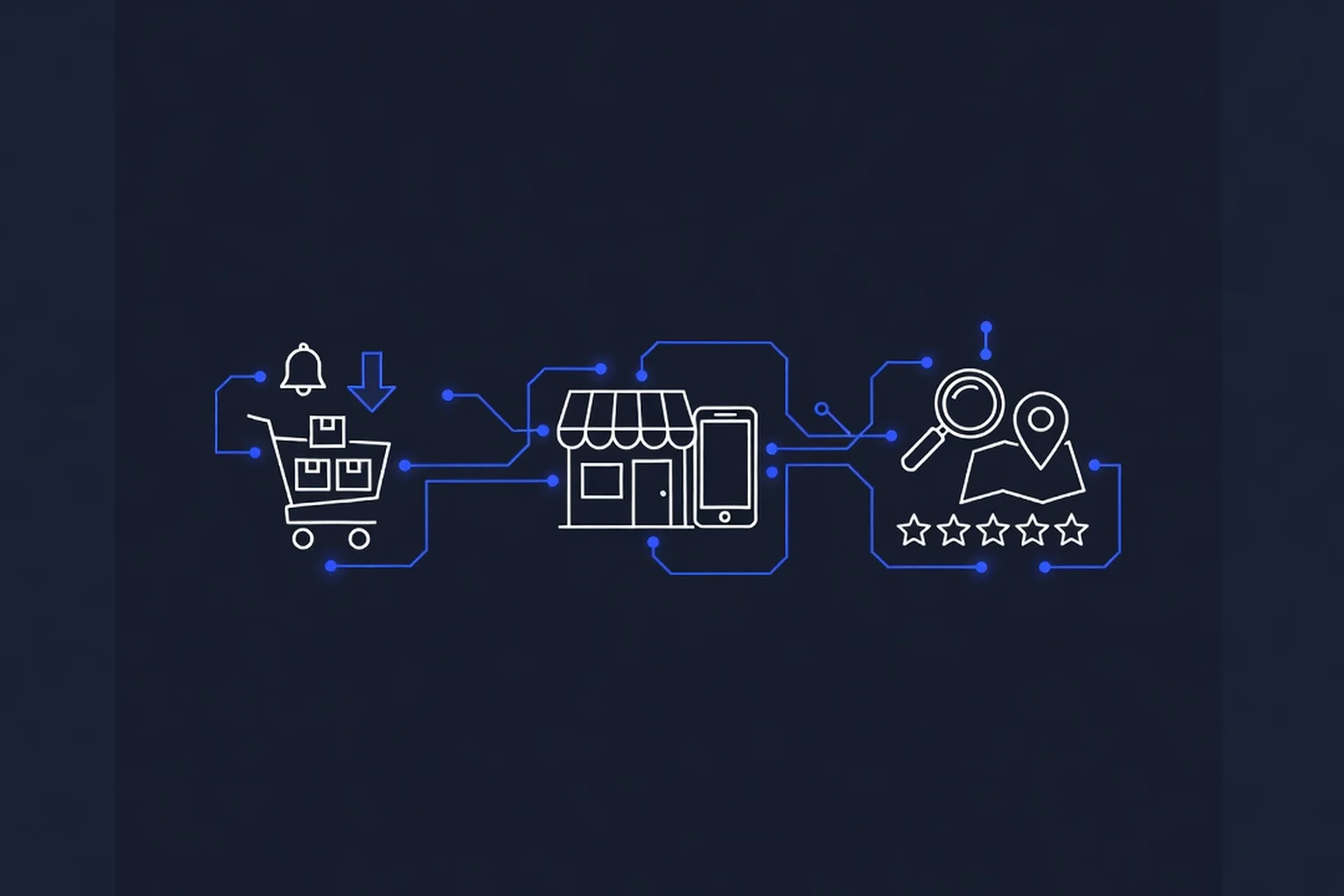
On October 15, Google switched on Universal Cart in the United States — one shopping cart that follows you across Google Search and the Gemini app, collects products from multiple retailers into a single list, watches for price drops and restocks, surfaces promo codes and credit-card perks, and can finish checkout through Google Pay without you ever leaving Google. It was previewed at Google I/O in May; it is live now, weeks before the holiday shopping season. When we looked at agentic commerce in September, the open question was whether AI agents would actually buy anything. The latest industry data still puts fully autonomous AI checkout at under 1% of transactions — but AI-assisted shopping just went mainstream at Google scale, and this holiday season is its first live test. Here is what actually launched, and what a Temecula or Murrieta business should do about it this week.
What Actually Launched
- One cart across retailers, live in Search and the Gemini app. Save a product while browsing AI Mode in Search, save another while chatting with Gemini, and both are waiting in the same cart when you come back. Google's own example: a handbag from Steve Madden saved in AI Mode, then a sweater from Quince and lipgloss from Ulta Beauty saved in Gemini — one organized list instead of browser tabs and screenshots.
- It watches prices and inventory for you. The cart is built on the 60+ billion continually refreshed product listings in Google's Shopping Graph, and it works in the background: notifications fire when a saved item drops in price or an out-of-stock product comes back.
- It finds savings you didn't know you had. Universal Cart is built on Google Wallet, so it understands your cards' perks and can suggest which payment method gets you the better deal — and it surfaces relevant promo codes right in the cart.
- Checkout happens at Google, or at the merchant's store — the shopper chooses. You can pay with Google Pay in a few taps (Google names Nike, Sephora, Target, Ulta Beauty, Walmart, Wayfair, and "many Shopify merchants" as launch checkout partners) or transfer the items directly to the merchant's own cart to finish buying on their site. Either way, Google says, the merchant remains the seller of record and handles confirmations and customer support.
- The plumbing is a protocol, not a one-off. Google describes the checkout as "powered by the Universal Commerce Protocol (UCP)" — the standard for linking AI agents and retailers that Google released this year. This cart is the consumer-facing surface of infrastructure built for a lot more agentic commerce to come.
Why This Matters for a Temecula or Murrieta Business
Put the numbers in order before reacting. Fraud-prevention firm Accertify published data this week separating "agentic shopping" (AI helps a human shop) from "agentic checkout" (AI completes the purchase itself): the latter is under 1% of all transactions — basis-point territory. Stripe's president says agentic commerce activity "went vertical" in September, without giving figures. High growth rate, tiny base. And Universal Cart is deliberately not the autonomous part: Google framed it as the practical, shopper-in-control track, distinct from the agentic capabilities that act on your behalf. So no, robots are not about to buy out your inventory.
What actually changed is quieter and bigger: the middle of a purchase — the saving, comparing, waiting, and choosing — can now happen on Google's side of the fence instead of on your website. A shopper's shortlist of your products, your competitors' prices, and the promo codes that apply now lives in a Google UI with price-drop alerts running in the background. Your site still closes the sale (Google kept merchants as seller of record, a choice that matters), but whether you make the shortlist at all is decided by the quality of your product data inside Google's systems. Meanwhile, the same shift is hitting businesses that never touch a product feed: when a local customer asks Gemini for a recommendation, the consideration layer is also happening inside an AI surface instead of on your homepage. We walked the agent side of that when Google shipped its Gemini AI coworker; Universal Cart is the consumer mirror. And don't confuse either with the loud agent-blocking headlines — Amazon restricting outside AI agents like Meta's Muse is a fight about autonomous bots and credentials, not about the assistive layer that just went live for everyone.
What to Actually Do This Week
- If you sell physical products: your data feed is your storefront now. The cart is built on 60+ billion continually refreshed Shopping Graph listings. If your Google Merchant Center feed is stale — old prices, wrong stock, missing products — you are either invisible in that cart or showing numbers that lose the comparison. Audit the feed before the holiday rush, and make sure product schema on your site matches it.
- If you're a service business: your battleground is the answer, not the cart. Most Temecula and Murrieta businesses will never appear in Shopping Graph — and your version of this shift is the AI answer layer. That means a complete, unsuspended Google Business Profile (we have a recovery playbook if yours got flagged), a steady flow of real reviews, and service pages that plainly state what you do, where, and at what price. When someone asks an AI for a recommendation, that is your Universal Cart moment — you're either in the answer or you're not.
- Get your pricing posture straight before the holidays. Automated price-drop alerts plus promo-code surfacing means your listed price gets compared harder, at the exact moment of choice. Pick your real price and stand behind it — and keep your own site's pricing current, because stale prices are what AI answers quote back to customers.
- Don't rebuild your store for the 1%. Autonomous checkout is under 1% of transactions. The boring 2026 work — accurate data, a fast site, clean schema, a healthy Business Profile — is what feeds both classic search and every AI surface on top of it. Do that first; it compounds no matter which platform wins the cart wars.
- Or hand the visibility work to a local operator who does this daily. PepeWebTech builds and runs AI employees and web presence for Temecula and Murrieta businesses — AI Chatbot at $397/mo, AI Phone Agent at $697/mo, or the Full AI Package at $997/mo, always with free setup — flat pricing, month to month, no long-term contracts. Book the free demo and see what your business looks like from inside the AI answer layer today.
The Bottom Line
Universal Cart is not AI taking over shopping — it is Google making its own surfaces the place where shopping gets organized, with checkout infrastructure (UCP) built for whatever comes next. The small-business response is unglamorous and urgent: accurate product data, a clean local presence, real reviews, and pricing that survives automated comparison. Do that and every layer Google stacks on top — cart, agent, or answer — works in your favor instead of without you. We track the whole agentic commerce curve, from whether agents buy at all to who controls the cart, on the blog.
Sources
- Google — Google's new Universal Cart launches today in the U.S. (October 15, 2026) — the primary announcement: Universal Cart is now available in the U.S. across Google Search and the Gemini app; saves products from multiple retailers into one cart (Steve Madden, Quince, Ulta Beauty examples); built on 60+ billion continually refreshed Shopping Graph listings with price-drop and restock notifications; built on Google Wallet to suggest payment methods by card perks and surface promo codes; checkout via Google Pay with Nike, Sephora, Target, Ulta Beauty, Walmart, Wayfair, and many Shopify merchants, or transfer to the merchant's cart, with the merchant remaining seller of record; checkout powered by the Universal Commerce Protocol (UCP); posted by Suresh Ganapathy, Senior Director of Product Management, Consumer Shopping.
- 9to5Google — Google rolling out Universal Cart that lets you shop the web and find deals with Gemini, Search (October 15, 2026) — independent confirmation of the U.S. rollout following the May Google I/O announcement: items save to the cart from Search, AI Mode, and the Gemini app; Google monitors for deals and price changes and alerts on drops; Wallet integration surfaces card cashback and promo codes; the feature is U.S.-only for now and arrives just ahead of the holiday shopping season.
- Stellagent — AI Commerce News Digest (October 16, 2026) — the industry context: Accertify data separating agentic shopping from agentic checkout puts fully autonomous AI checkout at less than 1% of all transactions; Stripe President John Collison says agentic commerce activity "went vertical" in September without giving figures; Amazon is restricting outside AI shopping agents (including Meta's Muse) over identification and credential concerns; the digest's read on Universal Cart — the middle of a purchase now sits on Google's side, making price and stock feed accuracy decisive for merchants this holiday season.