Temecula Tourism Hit $1.2 Billion. Here's How Local Small Businesses Claim Their Share.
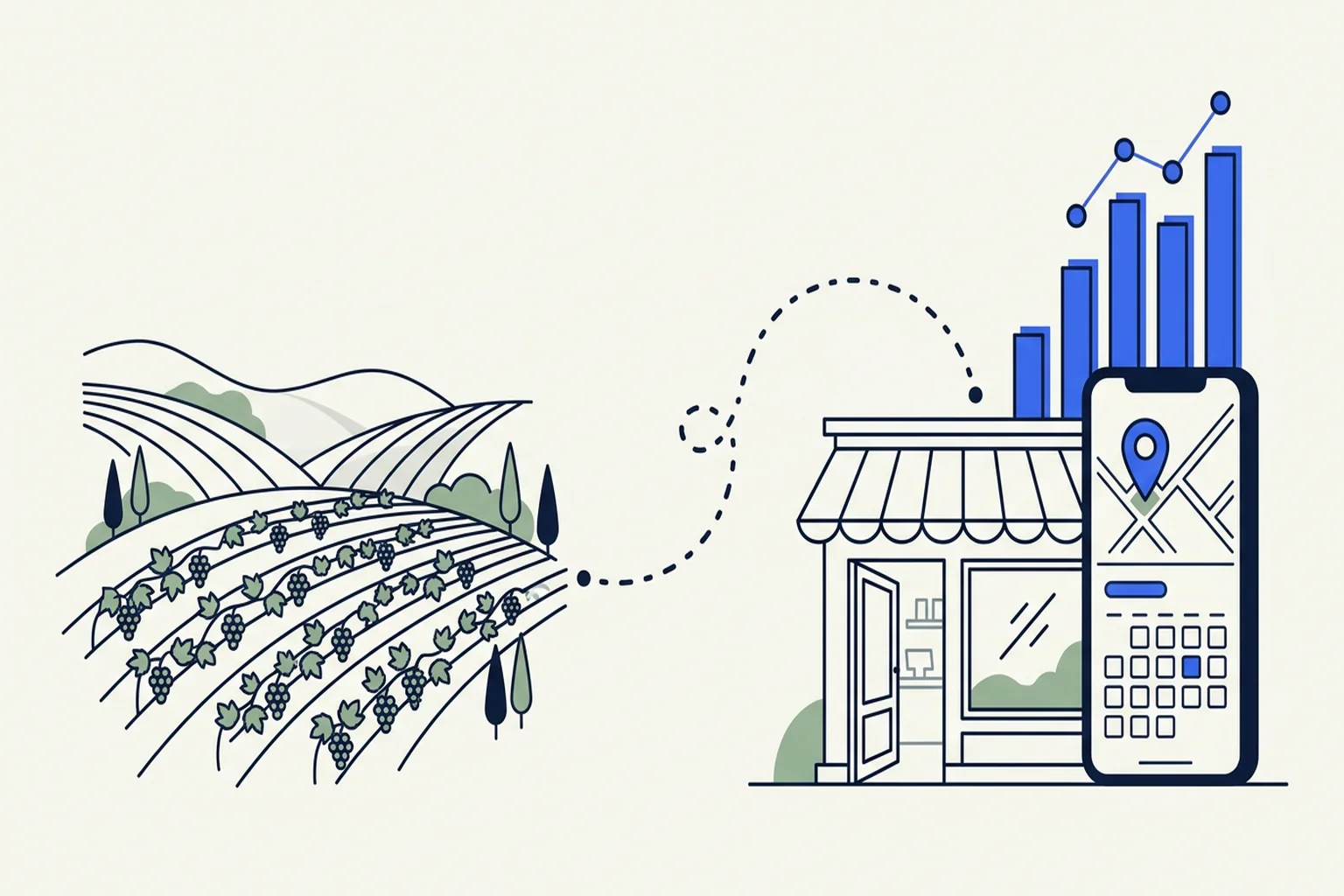
A new economic impact report puts Temecula Valley visitor spending at $1.2 billion for 2025 — up 1.7 percent over the year before. Travel-generated employment reached 9,650 jobs, direct travel earnings climbed 7.4 percent to $415.2 million, and the industry generated $53 million in direct tax revenue. The region also crossed a milestone visitors bureau leaders have chased for years: overnight visitor volume grew to 1,566,500 person-trips, up 1.3 percent, cementing the valley's shift from a day trip to a multi-day destination.
Those are big, abstract numbers until you run a tasting room, restaurant, hotel, tour company, or retail shop in Temecula or Murrieta. Then the only question that matters is: when 1.5 million-plus overnight visitors plan their trip, how much of that $1.2 billion finds your business — and how much flows to whoever answered the internet better than you did?
Here is where the money actually went, how visitors decide before they arrive, and the fixes that fit a small-business budget.
Where the $1.2 Billion Actually Went
The report, prepared by Dean Runyan Associates for Visit Temecula Valley, breaks visitor spending into categories — and the spread matters more than the total:
- Arts, entertainment, and recreation: $396.9 million (+3.1%) — the region's single largest visitor spending category, bigger than wine alone.
- Lodging: $753.7 million (+1.0%) across hotels, motels, and short-term rentals.
- Food service: $235.9 million (+4.8%) — the fastest-growing major category.
- Food stores: $144.1 million (+4.1%) and retail: $106.5 million (+1.9%).
Read that list as a small business owner and the story is encouraging: visitor money is spreading beyond the marquee wineries into restaurants, shops, and experiences. Visit Temecula Valley's interim CEO Annette Brown said it plainly — travelers are "staying longer and spending more across every part of our visitor economy, and not just wine country."
But spreading money is not the same as spreading it evenly. The valley hosts nearly 50 wineries, most offering tastings in the $20–$30 range, plus a deep bench of restaurants, tasting-adjacent services, and tour operators — all competing for the same visitor's same three-stop itinerary. When the pie grows 1.7 percent but your street has fifty doors, your share depends on being findable and bookable, not on the regional number.
The Visitor Journey Happens Before Anyone Drives the 15
Here is the uncomfortable part for businesses that still treat their website as a brochure. Nationally, 72 percent of travelers now prefer booking online, versus 12 percent who favor traditional travel agencies. More than half — 56 percent — research and book activities before their trips, and a quarter plan activities four or more weeks out.
That means the typical Temecula visitor has partially built their itinerary from their couch in Los Angeles, San Diego, or Phoenix weeks before check-in. They asked Google where to taste, scrolled maps, compared tasting fees, checked whether your patio needs a reservation, and moved on when the answer took more than ten seconds to find.
The device split matters too: roughly 60 percent of online travel research happens on phones, yet about 62 percent of actual bookings still complete on desktop. Translation: travelers find you on mobile and commit on desktop — so both versions of your presence have to work, and hand off cleanly. A slow mobile page or a booking flow that breaks between phone and laptop quietly kills trips that were already 80 percent decided.
Five Leaks That Quietly Cost Valley Businesses Money
Working with local service businesses, the same gaps show up repeatedly:
- An incomplete or stale Google Business Profile. Wrong hours, no tasting fee range, no menu link, three-year-old photos. Your profile is the first impression for map searches, and Google's AI summaries increasingly answer "where should we taste in Temecula" from profile data. Start with our Google Business Profile setup guide, then harden it with the AI-era Maps checklist.
- No reservation path. If booking requires a phone call during tasting hours, you lose every traveler who plans at 10 p.m. on a Tuesday. Even a simple Cal.com or Resy link converts research into commitment while intent is hot.
- A mobile site that loads like 2014. Mobile research is where the trip starts; speed and legibility decide whether it continues. The fixes are boring and worth it — our Core Web Vitals guide covers the ones that matter.
- Unanswered questions after hours. "Do you allow kids?" "Is there live music Saturday?" "Can we bring our own picnic?" A chat widget trained on your actual policies answers these at 11 p.m. and captures the lead; silence loses it to the next listing. See the realistic version in our AI chat widget guide.
- No follow-up or review engine. The multi-day shift means visitors have time for a second visit — the winery they loved Tuesday, dinner Friday. An email list, a review request that actually goes out, and a simple "come back for harvest weekend" nudge turn one visit into two.
What Good Looks Like on a Small Budget
You do not need a resort's marketing department. You need four things working together: a complete and current Google Business Profile, one obvious online booking or reservation path, a mobile site that loads fast and answers the top five visitor questions above the fold, and something that fields questions when nobody is on the clock. That is a weeks-not-months project at small-business prices — and unlike the regional $1.2 billion, every incremental booking it captures is yours.
The timing is also forgiving right now. Harvest season runs from roughly July into October or November in the valley, foliage season follows, and the holiday quarter — on track nationally to be the first trillion-dollar one ever — starts bidding up attention in October. Businesses that fix their booking path in September collect the harvest and holiday traffic; businesses that fix it in November collect the leftovers. If you want the longer runway, our Q4 preparation guide has the week-by-week version.
The Bottom Line
A billion-dollar visitor economy does not lift all boats automatically. It rewards the businesses that are findable when the trip is being planned, bookable when the decision is made, and memorable enough to earn the return visit. The valley did its part — record spending, record stays, money spreading past wine country. The remaining work is digital, it is cheap relative to what it returns, and it is the difference between reading about the $1.2 billion and appearing in next year's version of it.
PepeWebTech is based right here in Temecula, and this is exactly what we build for local businesses: fast websites with real booking paths, AI chat and phone agents trained on your business, and follow-up systems that turn first visits into regulars. If you want your share of the 2026 visitor economy working before harvest season peaks, book a free 15-minute call or see the plans.
Sources
- Wine Industry Advisor (Aug 12, 2026) — Dean Runyan Associates preliminary 2025 estimates for Visit Temecula Valley: $1.2B direct travel spending (+1.7%), 9,650 jobs, $415.2M earnings (+7.4%), $53.0M direct tax revenue, 1,566,500 overnight person-trips (+1.3%), and category-level spending breakdowns
- Visit Temecula Valley — official wineries page: nearly 50 wineries, typical tasting fees $20–$30, harvest season July through October/November, typical three-winery visit pace
- OysterLink — Online Travel Booking Statistics 2026 (updated Jan 2026): 72% of travelers prefer booking online vs 12% traditional agencies; ~60% of online travel traffic on mobile vs ~62% of bookings on desktop; 56% research and book activities ahead of trips