ChatGPT Can Now Read Your Recorded Calls. Here's the Fine Print a Small Business Should Read First.
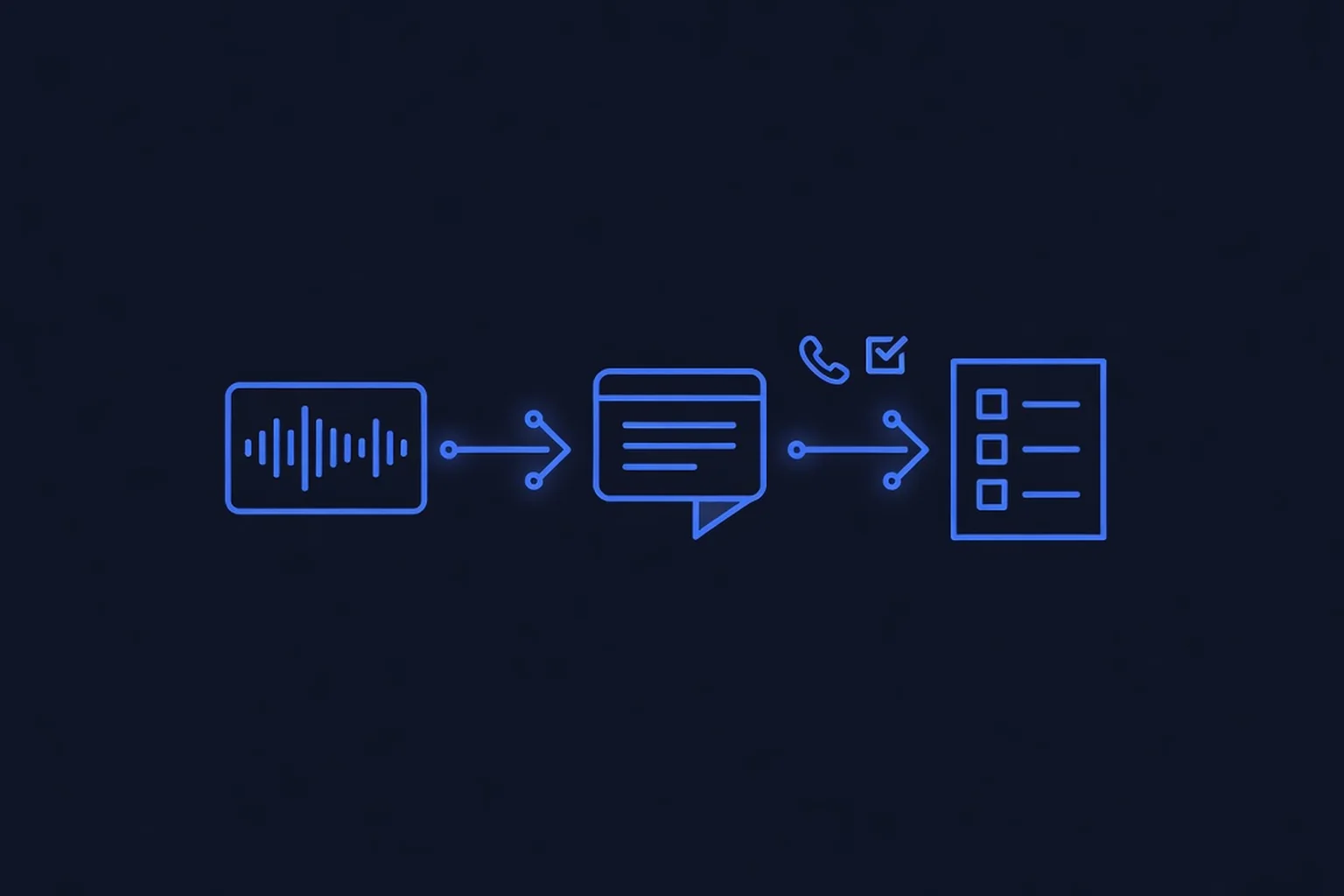
On October 6, OpenAI added a short entry to the ChatGPT release notes that solves one of the most common unsolved problems in a small business: the recording you already have and never re-listen to. "Upload audio files to ChatGPT to create transcripts, summarize recordings, and ask questions about their contents. You can turn a meeting, interview, or lecture into structured notes or a follow-up email draft." Attach the file, describe what you need, and the follow-up email you have been avoiding since Thursday drafts itself. But two footnotes decide whether this is a tool or a liability for a business in Temecula or Murrieta — one about how the feature fails, and one about which recordings you are allowed to feed it in California. Here is what it actually does, and how to use it without learning either lesson the expensive way.
What the Release Notes Actually Say
- It is a paid feature, and OpenAI is not shy about it. Audio uploads are available with paid ChatGPT subscriptions and workspaces, including Enterprise — and the supporting help article is blunt: "Audio uploads are not available on the Free plan at this time." Availability also "may vary by workspace settings, region, client version, and selected model," so if the paperclip refuses your MP3, that is the first place to look.
- Nine formats, one trap. WAV, MP3/MPEG, OGG/OGA, audio-only WebM, PCM, FLAC, AAC, M4A, and audio-only MP4 are supported. The words audio-only are doing real work: WebM and MP4 files that get identified as video are rejected outright, and the file "must contain a valid, decodable audio stream." A screen recording with a soundtrack is not an audio file.
- 512 MB per file, best-effort processing. A single audio file can be up to 512 MB — the same ceiling OpenAI applies to documents. Longer recordings "may be processed in smaller sections when Data Analysis is available," and OpenAI says plainly that "processing is best-effort, and very long recordings may time out." There is no stated limit in hours; the ceiling is bytes and patience.
- The quota is real and invisible. Paid plans can upload 80 files every three hours, shared storage is capped at 25 GB per user and 100 GB per organization, and OpenAI states it "does not currently show how much of your rolling upload-rate quota has been used or remains." Worse, the troubleshooting notes warn that "failed upload attempts can sometimes count toward the upload-rate limit" — so a run of rejected video files can spend the allowance your one good upload needed.
- OpenAI itself tells you not to trust the transcript. "Transcripts may contain errors, and speaker identification may be unreliable. Review important details against the original recording," with performance that varies across languages. That sentence is the difference between a draft and a sent email.
The Workflow Worth an Hour of Your Week
The highest-value use for a local business is exactly the one OpenAI leads with: turning a recorded call into a follow-up that separates what was actually agreed from what merely sounded agreeable. Upload the recording and ask for four lists — confirmed decisions, actions with owners and dates, questions nobody answered, and ideas nobody committed to — then an email drafted only from the first list. Listen back to the moments where price, scope, or deadlines came up, because that is where a transcript error costs money and a misattributed "I'll handle that" costs a relationship. The pattern is the same one we recommended when AI recommendations started deciding local sales: the tool drafts, you confirm. If you already pay for ChatGPT, this is the cheapest hire you will make this quarter — it just works on recordings that already exist.
The California Footnote: Consent Comes Before the Upload
Audio uploads analyze recordings you made somewhere else — and in California, whether you were allowed to make them is not a technicality. California Penal Code 632 is an all-party consent law: it prohibits intentionally recording a confidential communication without the consent of all parties, and it reaches telephone calls and in-person conversations alike. The new feature changes none of that; it simply gives the recordings you hold a second life as data shipped to a third party. Three habits keep this clean. Announce recording at the start of calls — if your phone system plays a recording notice, that beep is doing legal work. Check your PBX and mobile settings so you actually know what is being captured. And before uploading anything sensitive to a consumer AI tool, know your data settings: OpenAI states it does not use content submitted to business offerings like the API and ChatGPT Enterprise to improve model performance, while consumer-plan use depends on your data controls. Client calls are exactly the recordings that deserve the business-tier answer.
What a Temecula or Murrieta Business Should Actually Do
- Pilot it on one recurring recording this week. Consultation calls, warranty follow-ups, vendor negotiations — pick the category where you most often ask "wait, what did we decide?" Upload two or three consent-clean recordings and grade the output against what you remember. One correct follow-up email pays for the month.
- Never let the draft speak for you unverified. Speaker identification is unreliable by OpenAI's own documentation. If two people on the call said "I'll send that over," confirm which one actually owns it before the email goes out.
- Fix recording consent now, not after. Play the announcement on every recorded line and write it into your intake scripts. In an all-party state, the cleanest workflow is the one where consent is never in question.
- Convert the files you control; skip the ones you don't. Voice memos to yourself, dictated site notes, team meetings held on notice — all clean fuel. A customer call recorded without consent is not a workflow asset; it is an exposure.
- If the real problem is missed calls, solve that instead. Analyzing the recordings you have is a convenience; an AI voice agent that answers the calls you are currently missing is coverage. PepeWebTech sets up AI employees for local businesses on flat, published pricing — AI Chatbot at $397/mo, AI Phone Agent at $697/mo, or the Full AI Package at $997/mo, always with free setup — and you get a report of every conversation they handled, no uploading required. Book the free demo to hear one take a real call.
The Bottom Line
ChatGPT audio uploads are the rare AI feature aimed squarely at work a small business already does: remembering what was said and acting on it. Use it on the recordings you are entitled to, verify before anything leaves your outbox, and treat the transcript as a very fast first draft rather than a record. And when the goal is not remembering calls but never missing one, that is a different tool — the same lesson OpenAI's always-on dots taught: always-on beats after-the-fact. We track both sides of it on the blog.
Sources
- OpenAI Help Center — ChatGPT release notes, October 6, 2026: Audio uploads in ChatGPT — the primary announcement: upload audio files to create transcripts, summarize recordings, and ask questions about their contents; turn a meeting, interview, or lecture into structured notes or a follow-up email draft; available with paid ChatGPT subscriptions and workspaces, with availability that may vary by workspace settings, region, client version, and model; transcripts may contain errors.
- OpenAI Help Center — Uploading files and audio to ChatGPT — the fine print: audio uploads are not available on the Free plan; supported formats are WAV, MP3/MPEG, OGG/OGA, audio-only WebM, PCM, FLAC, AAC, M4A, and audio-only MP4, with video WebM/MP4 rejected; audio files up to 512 MB with best-effort processing that may time out on very long recordings; 80 uploads per 3 hours and 25 GB per user with no visible quota meter and failed uploads counting toward the limit; transcripts may contain errors and speaker identification may be unreliable; business-offering content is not used to improve models.
- MIXED — ChatGPT now takes audio uploads up to 512 MB, but not on the free plan — independent coverage confirming the October 6 date and paid-plan requirement against both OpenAI pages, and walking the format traps, the invisible rate limit, and the advice to check rate limit, storage cap, and the OpenAI status page when an upload is refused.
- California Penal Code section 632 — the all-party consent statute a California business uploads under: a person who intentionally and without the consent of all parties uses a device to record a confidential communication — by telephone or otherwise — is prohibited from doing so.