ChatGPT Ads Just Hit $100 Million. Should Your Small Business Buy Them Yet?
On February 9, 2026, OpenAI turned on advertising inside ChatGPT for US users. Six weeks later, Reuters reported the pilot had crossed $100 million in annualized revenue. By May, the minimum spend requirement was gone. By June, OpenAI had opened a self-serve Ads Manager and added cost-per-click bidding. If you run paid ads for a small business in Southern California, your agency or your software dashboard just gained a new tab labeled "ChatGPT," and someone is going to ask whether you should put money in it. This is the honest answer for a small business owner, not a media buyer chasing the next channel.
The short version: ChatGPT Ads are real, they work for some businesses, and they are cheap to test right now. But the reasons they work are also the reasons most small businesses should wait or spend very little. Here is what the product actually is, what it costs, what it does well, where it breaks, and the decision framework a plumber in Riverside, a med spa in Irvine, or a law firm in San Diego should actually use.
Category: SEO & Marketing 8 min readWhat ChatGPT Ads Actually Are
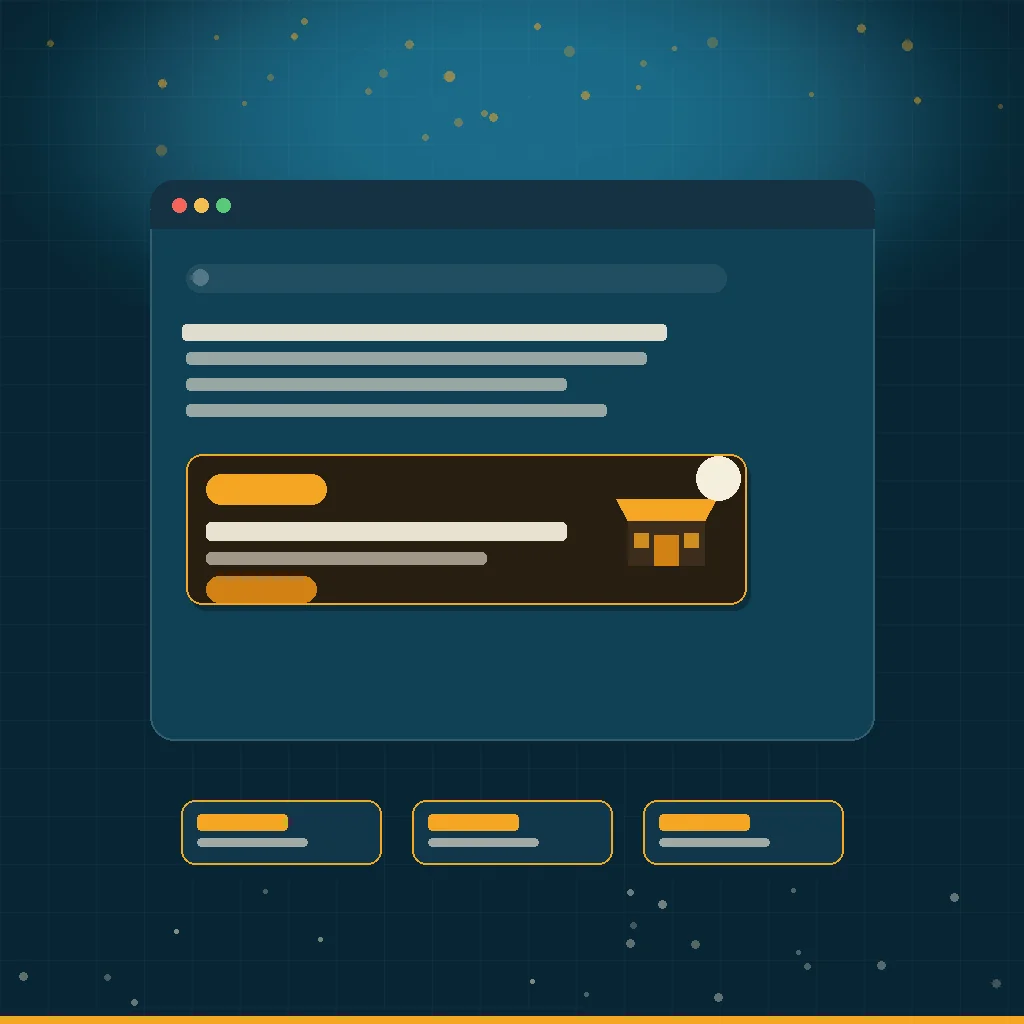
ChatGPT Ads are sponsored cards that appear at the bottom of an AI answer, clearly labeled "Sponsored." They do not change what the AI says in the answer itself. As OpenAI explained in its July 2026 announcement of new buying options, the organic answer is generated first, and a separate system then evaluates which sponsored card, if any, is relevant to the conversation. The advertiser never sees the conversation, and OpenAI does not share conversation content or personal details with advertisers.
This is the part that separates ChatGPT Ads from Google Ads in a way that matters for small business budgets. Google sells keywords. You bid on "emergency plumber Los Angeles," and if you win the auction, your ad shows when someone types that. ChatGPT sells relevance to a conversation. You do not bid on a keyword. You describe your business, your offer, and who you want to reach, and OpenAI's system decides whether your card fits the answer someone is reading. That means two things. First, you cannot brute-force placement by outspending a competitor on a specific term. Second, you also cannot reliably predict when your ad will show up, which makes the channel harder to plan around than Google.
The relevance weighting is real and worth understanding. Per the pricing analysis from Lorphic in June 2026, a well-written ad on a $3.50 bid regularly outperforms a weak ad on a $6 bid. OpenAI is optimizing for usefulness to the reader, not just for the highest bidder. If your ad reads like a generic banner, it will not show up no matter what you pay.
What It Costs Right Now
The numbers, as of mid-2026, are public and consistent across multiple sources. ChatGPT Ads run roughly $3 to $5 per click on CPC bidding and $25 to $60 per 1,000 impressions on CPM bidding. There is no minimum spend, and self-serve access through the new Ads Manager is in open beta. For comparison, Google Search Ads range widely, from $1 CPC in low-competition niches to $50 or more in legal, insurance, and home services.
So at the headline level, ChatGPT Ads look cheaper than Google Ads for most small business categories. That is true on a cost-per-click basis. But cost-per-click is not the number that pays your rent. What matters is cost per qualified lead, and that is where the comparison gets more complicated. ChatGPT users are often in research mode, asking broad questions. Google users typing "roofers near me open Saturday" are usually ready to call. You will likely pay less per click on ChatGPT and convert a smaller share of those clicks into paying customers. Whether the math works depends entirely on your business and your offer.
One concrete signal on demand: OpenAI crossed $100 million in annualized ad revenue in six weeks, per Reuters' March 26, 2026 report. That is not a projection. That is real spend from real advertisers, and it happened faster than almost any ad product launch in recent memory. Inventory is filling, and CPCs are likely to climb over the next 12 to 18 months as more businesses pile in. The cheap early-window CPCs will not last forever.
What ChatGPT Ads Are Good At
There are three categories of small business where ChatGPT Ads deserve a real test today, with a small budget.
- Products and services people research conversationally. If your customers ask questions like "what is the best CRM for a 5-person real estate team" or "how do I choose between a heat pump and a furnace," you are in territory where ChatGPT Ads perform. Buyers in this mode are comparing options, and a sponsored card next to a thoughtful answer can earn a click. Software, B2B services, higher-ticket consumer products, and education businesses fit here.
- Businesses with a strong educational content offer. ChatGPT users are reading. If your landing page gives them something useful, a free guide, a calculator, a real comparison, you will convert better than a generic "call us now" page. The traffic behaves like content traffic, not transactional search traffic.
- Testing new offers before committing to Google. Because there is no minimum spend and CPCs are still reasonable, ChatGPT Ads are a cheap way to find out which message resonates. Run a few hundred dollars, see which ad copy earns clicks, then take the winner to Google where you can scale with confidence.
For a SoCal example, a tax firm in Orange County running ChatGPT Ads on a free "2026 S Corp election checklist" landing page will almost certainly outperform the same firm running ads that point straight to a "schedule a consultation" form. Match the channel to the intent.
What ChatGPT Ads Are Bad At
For most local service businesses, plumbers, electricians, dentists, restaurants, salons, auto repair, ChatGPT Ads are the wrong tool in 2026. Here is why, plainly.
Your customers are not asking ChatGPT whether to hire you. They are typing "dentist near me" into Google, or searching "emergency plumber San Diego" on their phone at 9 p.m. Those are Google searches, Maps searches, and increasingly voice searches. ChatGPT does not yet capture that transactional, location-based, ready-to-buy intent at scale. When someone does ask ChatGPT for a local recommendation, the answer leans on Google Business Profile and Maps data, not on who is running the most ChatGPT Ads.
Perplexity's experience is the cautionary tale here. Perplexity launched ads in late 2024, became the first major AI search engine to sell paid placement, and then discontinued its entire ad program in early 2026. Multiple ad buyers told Adweek they struggled to measure click-through rates and return on ad spend because the platform lacked the reporting tools advertisers expect. Perplexity publicly cited concerns that ads undermined user trust. The lesson for small businesses is not that AI ads do not work. It is that AI ad products are immature, measurement is still messy, and the platforms are still figuring out what they want to be. Spending real money on a channel this young, before you can track it cleanly, is a risk.
The Decision Framework for a Small Business
Here is the rule of thumb. If you can answer yes to all three of these, test ChatGPT Ads with $300 to $500 this quarter.
- Do your customers research before they buy?
- Do you have a landing page that gives value, not just a contact form?
- Can you track leads back to a specific source in your CRM or spreadsheet?
If you cannot answer yes to all three, do not spend money here yet. Spend it on Google Ads, your Google Business Profile, and your website. Those channels are proven, measurable, and aligned with how people actually find local businesses in Southern California.
If you do test, keep it small and time-boxed. Set a hard cap, run it for 60 days, and judge it on cost per lead, not cost per click. Write ad copy that sounds like a helpful person, not a billboard. The relevance-weighted auction punishes lazy copy. And do not pause your Google Ads to fund the test. Add it alongside.
What It Means That Google Ads Costs Keep Climbing
The pressure pushing small businesses toward new channels is real. Adventure Media's 2026 analysis noted that Google Ads CPCs have climbed steadily for years, with some industries seeing cost-per-click rates triple since 2020. Home services, legal, and insurance in competitive markets like Los Angeles and San Diego are brutal. A $40 click that produces one phone call out of every 15 is a $600 lead, and that math stops working fast.
ChatGPT Ads are not the answer to that problem, at least not yet. But they are a signal of where advertising is going. Search is fragmenting across Google, ChatGPT, Perplexity, and increasingly voice and agent-driven interfaces. The small businesses that win the next five years will be the ones with a clean, fast, well-structured website that every channel can read from, strong local SEO, and a willingness to test new channels with small, measured budgets rather than betting the marketing plan on any single platform.
The Bottom Line for SoCal Owners
ChatGPT Ads are real, they are growing fast, and they are cheap to try. They are not a replacement for Google Ads for a local service business, and they are not mature enough to bet your marketing budget on. If you sell something people research conversationally and you have a landing page that earns the click, run a small test this quarter. If you are a plumber, a salon, or a restaurant trying to fill the calendar next week, your money is still better spent on Google Ads, your Google Business Profile, and a website that loads fast and converts. Watch ChatGPT Ads. Track them. But for most Southern California small businesses, the right move in late 2026 is a small, measured test, not a pivot.
Sources
- OpenAI — New ways to buy ChatGPT ads (Jul 2026)
- Reuters — OpenAI's US ad pilot exceeds $100 million in annualized revenue in six weeks (Mar 26, 2026)
- The Information — OpenAI Surpasses $100 Million Annualized Revenue From Ads Pilot (Mar 26, 2026)
- Lorphic — How Much Do ChatGPT Ads Cost in 2026? CPC, CPM Budget Guide (Jun 25, 2026)
- Top Growth Marketing — How Much Do ChatGPT Ads Cost (Jul 2026)
- Get Ryze — Perplexity Ads: Closed to New Advertisers Since October (2026)
- Context Hints — Perplexity ads (discontinued) and Gemini ads
- Adventure Media — ChatGPT Ads Launch 2026: Everything US Businesses Need to Know
- Consilium Design — ChatGPT Ads Are Here: What Small Businesses Need to Know (Feb 2026)