Samsung's $73B AI Chip Bet: What It Means for Small Businesses

$73 billion.
That's how much Samsung is planning to spend on AI chip expansion in 2026 alone — a 22% increase over 2025, making it one of the largest single-year tech investments in history.
For small businesses wondering whether AI is worth the investment, this is your answer: the biggest players in tech are all-in on AI infrastructure.
The Signal
When a company like Samsung commits $73 billion to AI chips, it's not speculation — it's preparation for massive demand
Why This Matters Now
According to Samsung's Co-CEO Jun Young-hyun, the investment surge is being driven by "agentic AI" — autonomous AI systems that can perform complex tasks without constant human oversight.
This isn't about better chatbots. It's about AI that can:
- Manage your entire customer service pipeline — from inquiry to resolution
- Handle complex operations — inventory, scheduling, logistics
- Analyze business data in real-time — spotting opportunities and risks
- Create marketing campaigns — from strategy to execution
- Automate repetitive work — freeing your team for high-value tasks
And this AI needs hardware. Lots of it.
The Race for AI Dominance
Samsung is trying to overtake SK Hynix as Nvidia's dominant memory provider. But the real story isn't just about memory chips — it's about building the infrastructure for AI accessibility.
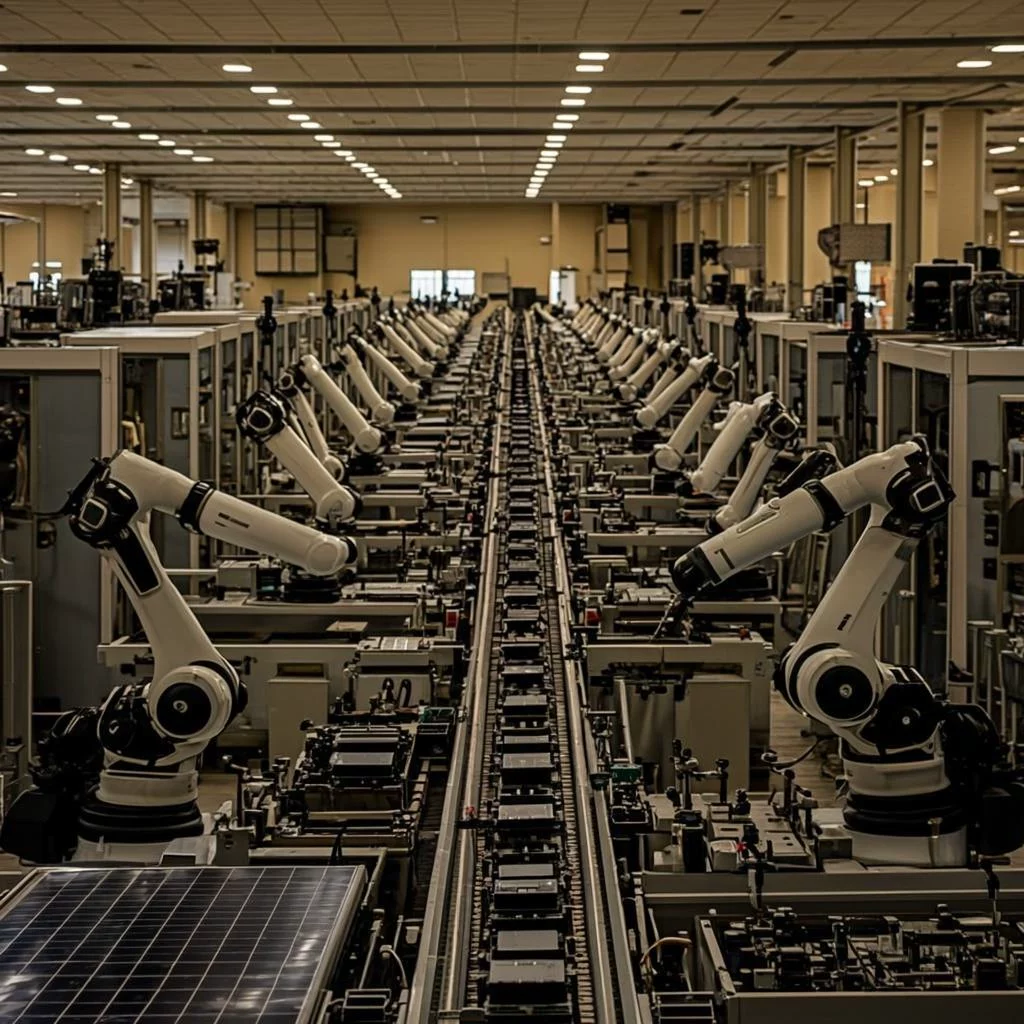
"The company is increasing production and research investments by 22 percent in 2026 in an attempt to overtake SK Hynix's lead as Nvidia's dominant memory provider. Co-CEO Jun Young-hyun says demand for agentic AI is fueling a surge in orders, with funds being funneled toward 'future-oriented' sectors like advanced robotics."
What $73 Billion Buys
Manufacturing Capacity
New chip fabrication plants to meet soaring AI demand
R&D Investment
Next-generation AI chip architecture for faster, more efficient models
AI-powered Advanced Robotics
Hardware for physical AI systems that can interact with the real world
high-performance Performance Gains
Faster processing, lower power consumption, better economics for AI deployment
What This Means for Small Businesses
1. AI Will Become Cheaper and More Accessible
More supply + more competition = lower prices. As Samsung, SK Hynix, Micron, and others scale production, the cost of running AI models will drop.
What costs $1,000/month today might cost $200/month in 18 months. What requires enterprise infrastructure today might run on a mid-range laptop tomorrow.
2. Better AI Tools Will Arrive Faster
Better hardware means more capable AI models. Small businesses will have access to tools that:
- Understand your business context better
- Make fewer mistakes
- Handle more complex tasks autonomously
- Integrate seamlessly with your existing systems
3. The Gap Between AI-Adopters and Non-Adopters Will Widen
Businesses that start building AI capabilities now will be positioned to leverage better tools as they arrive. Those waiting for "perfect" AI will find themselves competing against companies that have been iterating and improving for years.
key insight The Competitive Reality
Practical Takeaways for Your Business
Don't Wait for Perfect — Start With Good Enough
AI tools today aren't perfect. But they're good enough to:
- Automate customer responses with human review
- Generate first drafts of content for human refinement
- Analyze data patterns you might miss manually
- Handle scheduling and basic administrative tasks
The key is building workflows that combine AI efficiency with human judgment.
Focus on High-Value, Repetitive Tasks
Start with tasks that are:
- Time-consuming but low complexity
- Repetitive with clear patterns
- High volume — small improvements add up
Customer service triage, data entry, report generation, social media scheduling — these are perfect starting points.
Build, Don't Just Buy
Off-the-shelf AI tools are great, but they're also generic. The real competitive advantage comes from:
- Training AI on your business data
- Building custom workflows around your unique processes
- Integrating AI tools with your existing systems
- Iterating based on what actually works for your customers
Plan for Continuous Change
The AI landscape is moving fast. What works today might be obsolete in six months. Build systems that can:
- Swap out AI models as better ones emerge
- Adapt to new capabilities without total redesign
- Leverage improvements in hardware and software
The Bigger Picture
Samsung's $73 billion bet isn't just about chips. It's about:
- AI becoming infrastructure — Like electricity or the internet, it's becoming foundational to doing business
- Agentic AI going mainstream — AI that can act autonomously, not just respond to prompts
- Physical AI systems — Robots and automation that can interact with the real world
- Dramatically improved economics — Better hardware means cheaper AI, making it viable for more use cases
What to Do Right Now
Month 1-2: Experimentation
Try AI tools for specific tasks. Measure impact. Learn what works and what doesn't.
Month 3-4: Integration
Build AI into your workflows. Train on your data. Connect with existing systems.
Month 5-6: Optimization
Measure ROI. Iterate. Scale what works. Drop what doesn't.
Month 6+: Continuous Improvement
Stay updated on new tools. Reassess quarterly. Build organizational AI literacy.

Bottom Line
Samsung's $73 billion investment is a signal: AI isn't a trend, it's the future of business technology.
For small businesses, the question isn't "should we adopt AI?" — it's "how do we adopt AI effectively?"
The businesses that figure this out first will capture the competitive advantage. The rest will be playing catch-up.
The Opportunity
Better AI infrastructure = cheaper, more powerful AI tools. Start building your AI strategy now, not when your competitors already have one
AI is getting better, faster, and more accessible. The time to start is now.
Need Help Building Your AI Strategy?
Unsure where to start with AI adoption? We help small businesses identify high-impact opportunities, select the right tools, and build custom AI workflows that drive real results.
Get in touch to discuss your AI integration strategy.