The Race for 'Human-Made' Labels: What Small Businesses Need to Know
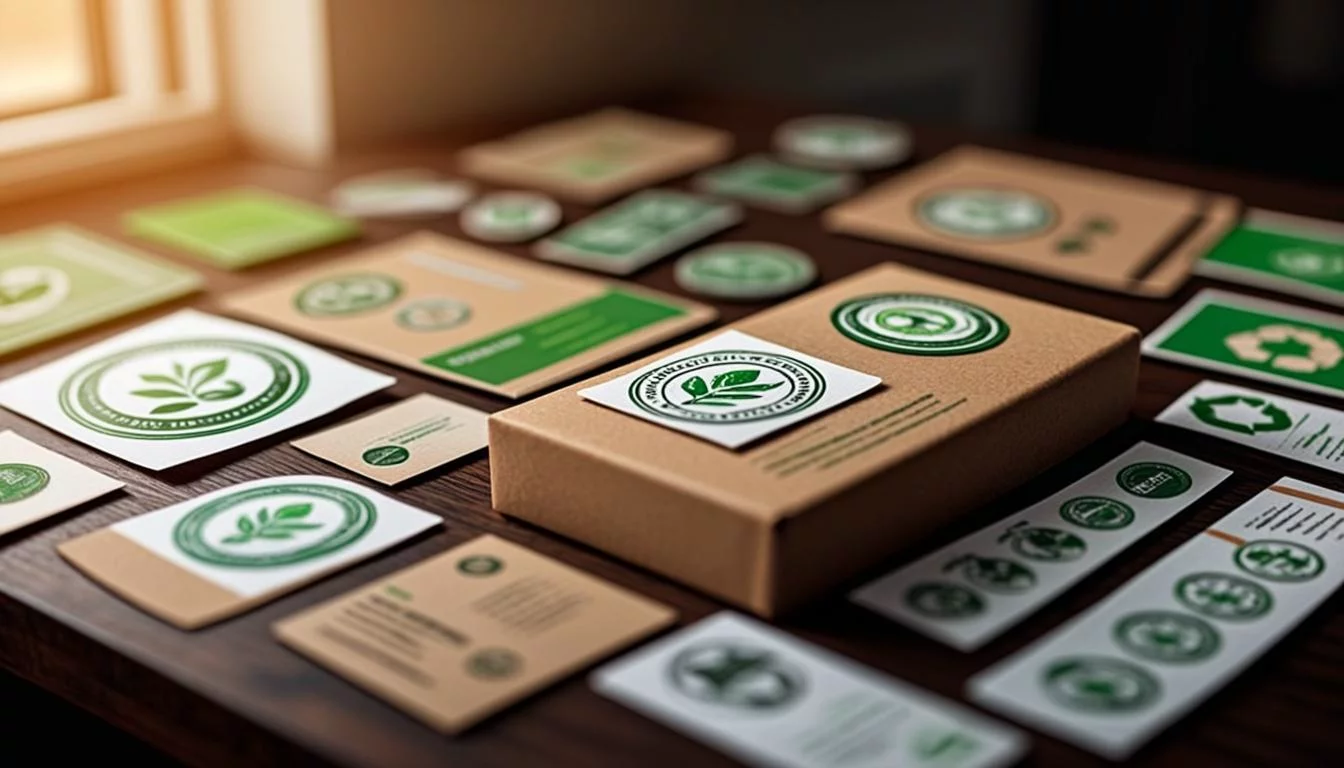
"Proudly Human." "No AI." "AI-free."
These labels are appearing on films, books, marketing materials, and websites worldwide. It's a backlash against AI automation — and a growing movement to distinguish human-created content from AI-generated.
But here's the problem: there are at least eight different initiatives competing to become the universal standard.
The Current State
Multiple organizations are racing to establish the 'human-made' certification that could get global recognition — similar to Fair Trade for ethically made products
Why This Is Happening Now
Generative AI has exploded across industries:
- Film: Entire movies produced with AI in days, not months
- Publishing: Books generated in minutes instead of years
- Marketing: Ad copy and visual content created at scale
- Music: Tracks composed without human musicians
- Web content: Blog posts and copy written by AI
Consumers are confused. Creators are concerned. Businesses are uncertain about how to label their work.
"AI is creating significant disruption and competing definitions of what is 'human made' are confusing consumers. A universal definition is essential to build trust, clarification and confidence." — Dr. Amna Khan, Manchester Metropolitan University
The Eight Competing Labels
Not By AI
Offers vetting service or badge downloads for a fee
Proudly Human
Australian-based certification with rigorous auditing
AI Free Cert
Requires payment and strict verification process
Books by People
Publisher-focused with questionnaire and AI checks
No AI Icon
Free downloadable badges without strict auditing
AI Free
Simple badge system with optional fee
The Mise en scène
Film distributor stamp for "No AI used" productions
content creation Faber & Faber
Publisher "Human Written" stamp on selected books
The Challenge: What Does 'AI-Free' Even Mean?
This is where things get complicated.
"AI is now so ubiquitous and so integrated into different platforms and services, that it's truly complicated to establish what 'AI free' means. From a technical perspective, it's hard to implement. I think that AI is a spectrum, and we need more comprehensive certification systems, rather than a binary with AI/AI-free approach." — Sasha Luccioni, AI Research Scientist
Consider These Questions:
- If you use AI for spell-checking, is your content AI-free?
- If AI helps brainstorm ideas, but you write the final copy?
- If AI generates a first draft, but you heavily edit it?
- If your design tools use AI in the background, like Photoshop's AI features?
- If your hosting platform uses AI for optimization?
Two Main Approaches Emerging
1. Binary Certification
Some initiatives take a strict stance: either content is human-made or it's not.
Film Example
The 2024 Hugh Grant thriller Heretic included a disclaimer: "No generative AI was used in the making of this film." A complete, clear, binary statement.
2. Generative AI-Free
Others draw the line at generative AI specifically — chatbots and tools that create content from prompts.
This allows businesses to use AI for things like:
- Grammar and spelling
- Data analysis and insights
- Optimization and automation
- Customer service chatbots (with clear disclosure)
While still being able to claim "generative AI-free" for core content creation.
The Verification Problem
Different initiatives take very different approaches to verification:
| Type | Process | Pros | Cons |
|---|---|---|---|
| Self-Certification | Download badge, use it | Free, easy | No verification, low trust |
| Basic Auditing | Questionnaires, spot checks | Better trust | Can be gamed |
| Rigorous Auditing | Professional analysis, AI detection | Highest trust | Expensive, time-consuming |
cost savings Certification Costs
Real-World Impact on Businesses
The Publishing Industry
Publishers are grappling with books produced in "minutes rather than months." The concern: readers can no longer tell if content reflects human experience or machine imitation.
Author Perspective
Author Sarah Hall described AI training on books as "creative larceny at scale" — driving the push for clear human-origin labels.
Consumer Confusion
When multiple labels compete with different standards, consumers don't know what they're looking at. "No AI" might mean different things from different certifiers.
Consumer Impact

What This Means for Small Businesses
The Opportunity
There's a growing "economic premium" on human-made content. As AI-generated content becomes ubiquitous, authenticity becomes a differentiator.
"As a result of AI content there is an economic premium put on human-made content and we want to lean into that." — Paul Yates, CEO, The Mise en scène Company
The Risk
Getting caught mislabeling content as human-made when AI was used could damage reputation significantly. Transparency matters more than ever.
Practical Guidance for Your Business
1. Define Your Stance
Decide what "AI-free" means for your business:
- Zero AI use anywhere?
- AI allowed for tools but not content creation?
- AI for brainstorming, human for final output?
- AI used with clear disclosure?
2. Be Transparent, Not Perfect
Instead of trying to find the perfect label, consider:
- "This content was written by a human with AI assistance for research and editing"
- "AI was used for data analysis, but all insights are human-interpreted"
- "Generative AI was not used in creating this content"
3. Focus on Value, Not Just Labels
Whether human-made or AI-assisted, what matters to customers is:
- Quality and accuracy
- Authenticity and relevance
- Value and usefulness
- Transparency and honesty
4. Watch the Standards Battle
This landscape will evolve. A few things to track:
- Will one label emerge as the standard?
- Will regulators step in with official guidelines?
- Will platforms (YouTube, Instagram, etc.) require disclosure?
- Will major brands adopt specific certifications?
Recommendations for Different Business Types
Content Creators (Bloggers, Writers, Designers)
If you create original content:
- Consider rigorous certification for competitive advantage
- Use clear disclosure statements for AI-assisted work
- Emphasize your unique human perspective and expertise
E-commerce Businesses
For product descriptions and marketing:
- Transparent disclosure beats misleading claims
- Focus on product quality and customer experience
- AI tools for optimization are different from AI-created content
Service-Based Businesses
If your expertise is your product:
- Human expertise remains your core value
- AI is a tool to enhance, not replace, your work
- Certification may matter less than client trust and results
Marketing Agencies
When creating content for clients:
- Be upfront about AI use in your process
- Offer both AI-assisted and human-only options
- Let clients choose their comfort level
The Bigger Picture
This isn't just about labels. It's about:
- Consumer trust — People want to know what they're consuming
- Creative ownership — Artists and writers protecting their work
- Market differentiation — Standing out in an AI-saturated world
- Economic value — Human expertise becoming premium
What's Next?
The next 12-18 months will likely see:
- Consolidation — Some labels will merge or disappear
- Regulation — Governments may establish disclosure requirements
- Platform policies — Social platforms may enforce labeling
- Market clarity — Standards will emerge from confusion
Bottom Line
The rush for "human-made" labels reflects real consumer concerns about AI saturation. But with eight competing standards, clarity is elusive.
For small businesses, the immediate priorities are:
- Transparency — Be honest about AI use
- Focus on value — Quality matters more than labels
- Stay informed — Watch for emerging standards
- Consider your audience — Do they care about human-made certification?
The Reality
A universal 'human-made' label may never exist. What matters is honest communication and delivering real value
Authenticity isn't certified by a badge. It's demonstrated through consistent quality, transparency, and genuine connection with your audience.
That's the approach that builds lasting trust — AI or no AI.
Need Help Navigating AI Transparency?
Unsure how to communicate your AI use to customers? We help small businesses develop honest, effective strategies for AI disclosure and content creation.
Get in touch to discuss your AI transparency strategy.